

What does it mean to make art together, apart? As digital infrastructures reshape how we connect and collaborate, creatives are no longer bound to the physical studio – nor are students. In fact, a growing number of arts education programmes are rethinking how practice can be taught, shared and sustained across distance. Falmouth University’s MA Fine Art Online is one such course. Aesthetica speaks to lecturers Josie Cockram, Kate Fahey and Srin Surti about how the programme brings together artists working across continents, contexts and disciplines to engage with global political, economic, social and ecological change. They reflect on recent showcases, share success stories and consider what lies ahead.
A: Can you introduce yourself – your role, specialisms and areas of interest?
JC: I’m the Course Lead on MA Fine Art Online and I run the first module, Contemporary Positions and Practice. I’ve been involved with the programme since it launched in 2021. I trained in sculpture and I work with moving image, sound and embodied and gendered experiences of space – online and on the ground. Developing this course has made me rethink the relationship between my studio practice and teaching.
SS: I’m an Online Tutor on the Collaborative Practice module, and I’ve also taught on others including Informing Contexts and Contemporary Positions and Practice. Coming from a print background, I’m always thinking about how we make imprints on each other. In my current PhD at Chelsea College of Arts, I’m thinking about how ambivalence around relief as printed image can be used as an analogy for themes of cultural hybridity, as well as exploring that through a South Asian diasporic perspective.
KF: I’m a Lecturer and I lead the Final Major Project module. I also come from a print background, but I’m an artist and researcher working across sculpture, sound and installation. Broadly, my interests are in making through feminist methodologies and ideas in relation to storytelling, materiality, affects and haptics. I’m interested in non-hierarchical spaces, co-creation and peer learning; thinking about pedagogical approaches where students are encouraged to be active agents in their own learning experience.
A: How would you sum up the Online Fine Art MA at Falmouth? What are the key aims of the course?
JC: We talk a lot as a team about what a de-centred form of art education might look like. We have an international intake with students working on every continent, which means we’re supporting artists in very different contexts, bringing different languages, art histories and identities to our community. One of our key aims is to activate the knowledge each student has of their own context and materials.
Practice-based online arts education is relatively new. We launched in 2021 and we’re one of only a few fine art Higher Education degrees running online in the English-speaking world. We’re grounded by our position in Falmouth School of Art, an established and acclaimed art school in the UK, but we’re thinking about how to be hosts for new conversations and ways of working. So, our lecturers don’t speak as masters of the discipline, but as artists with expertise and experience asking new questions.
Students enrol on our part-time, two-year programme at one of three points each year (September, January or May). They work through a first module together, then one of three carousel modules. They can qualify with a PG Diploma, or they can embark on a Final Major Project to achieve an MA.
SS: The course is really about putting different lenses onto your practice – theoretical, collaborative, strategic – and thinking: what new perspective could be meaningful to bring to my practice at this stage?
A: You launch several shows per year. Can you give a whistlestop tour of some of the stand-out projects you’ve worked on, and the range of countries and approaches involved?
JC: The outcome isn’t always an exhibition. We create online showcases documenting projects that take place all over the world, sometimes online, often on the ground in local communities.
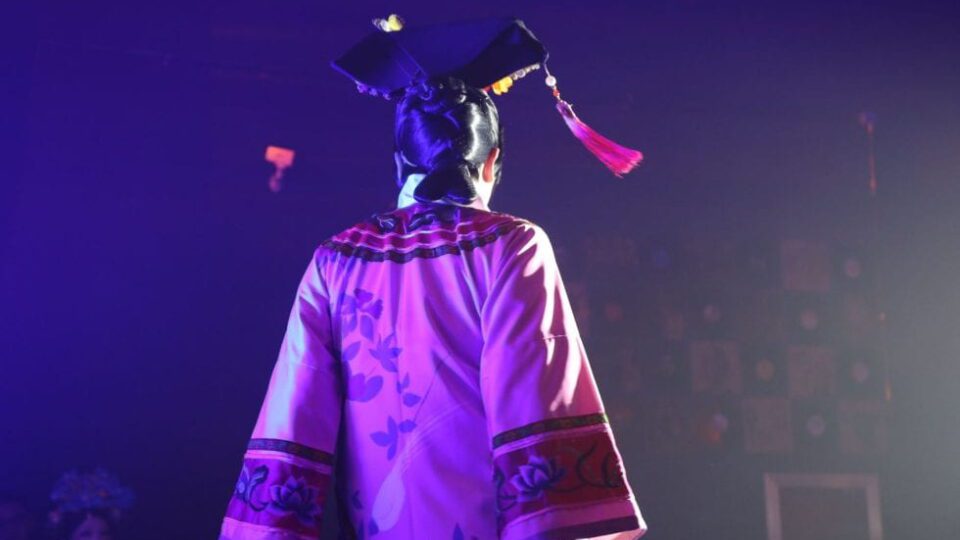
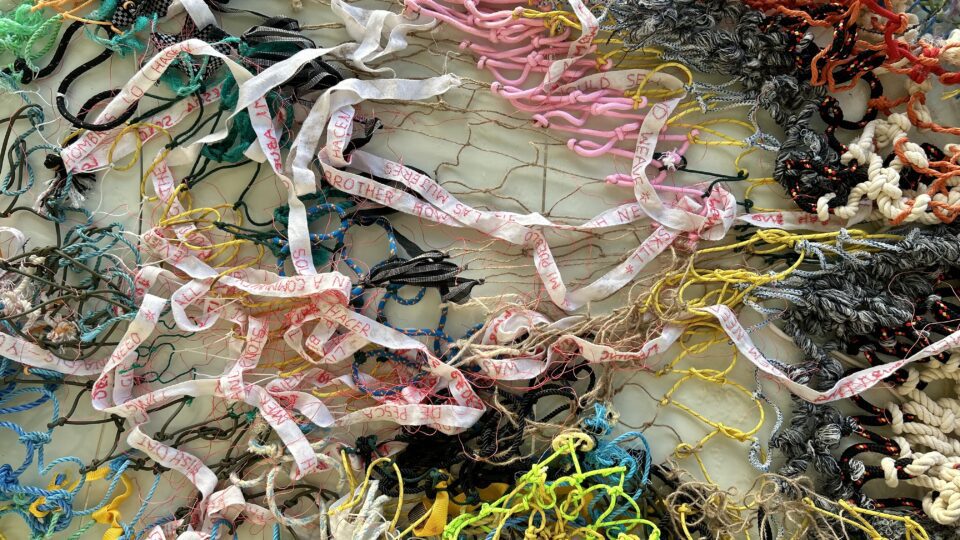
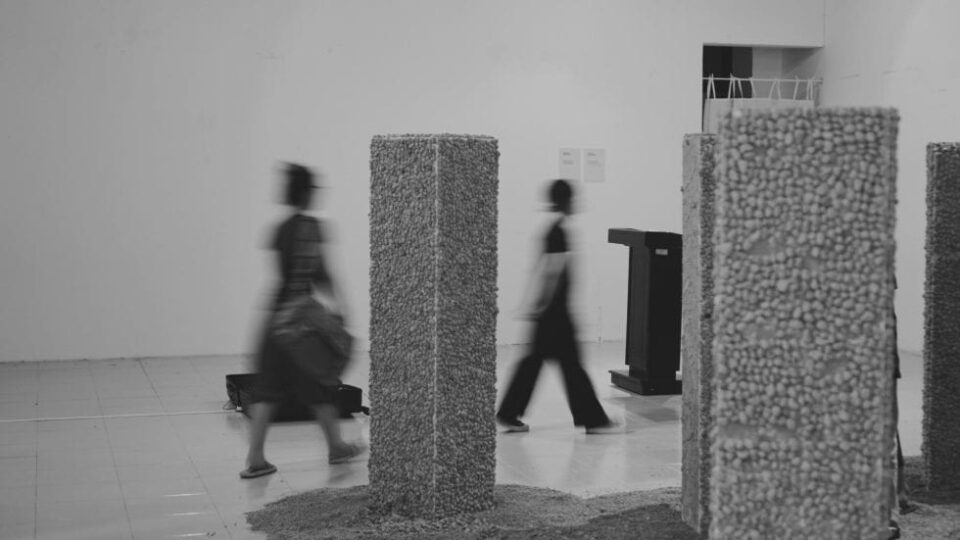
KF: I’ve supported eight different showcases now, and I’m always impressed by the journeys students have taken. For example, Esther Johnson is based in the Cayman Islands, and her Final Major Project drew on her interest in declining craft practices. For Holding, she initiated an amazing socially engaged project, working with people in her local community whose knowledge of netmaking activated the history – and contingent future – of the local fishing industry. In another recent project, Khoi Nugyen worked with his partner Nguyen Viet Trinh in Ho Chi Minh City to explore gender dynamics in the home. One of the most meaningful outcomes was the knowledge gained around the inseparability of art and life, as they explored the way in which gender dynamics leak into all lived experiences through installation and live performance. Beneath the Membrane was exhibited at Ho Chi Minh City University of Fine Arts in Vietnam.
JC: We’ve stayed in touch with Ho Chi Minh City University of Fine Arts to think about how we might continue to work with that institution. Which is an example of the way in which we are working collaboratively with students, staff, researchers and arts organisations and universities globally. Esther’s work was also presented within the 4th Cayman Islands Biennial after she graduated. There are lots of connections that get seeded through our course community that are really exciting.
SS: Students are really questioning the role of art in a social and cultural context. And they are asking what sustainability means as a real, meaningful thing that feeds back into a cultural context, and how they develop professional practices that sustain them, and the communities and land they are part of.
A: Can you tell us more about the media that graduating artists work with?
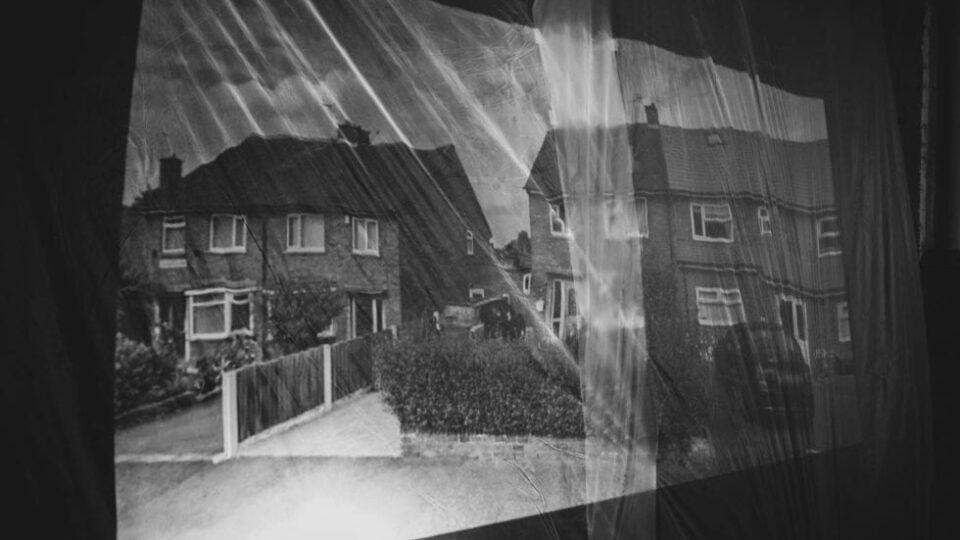
KF: Esther’s project in The Cayman Islands project is a good example of the range of approaches we see. The outcome wasn’t an exhibition, but a sharing event where the artist brought a net that had been co-made with participants to their workplaces. So the net went on its own journey around the Cayman Islands. We also see very different kinds of practice: Khoi’s project in Ho Chi Minh City used performance and installation to examine gender dynamics materially. Module assignments support students to gain the skills they will need in professional practice, so students produce a professional-level proposal and portfolio for their Final Major Project. They then use this to establish relationships of trust with external organisations, partners and collaborators, and to create opportunities after graduating.
A: What are some of the major concerns being addressed by your students right now? Have you noticed any trends? And how do they connect to what’s happening in the wider world?
JC: Sustainability is a key recurring theme. We have a whole module dedicated to it: Sustainable Strategies looks at sustainability through social, economic and environmental lenses. Many students are also asking questions about the place that their lived experience and biography has within their art practice, and how a piece that might be very personal touches other people’s lived experiences elsewhere.
SS: How the personal overlaps with the collective are two things we’re always negotiating as artists: in the things we make, but also in how we frame or situate that within other forms of creative output. And then there’s this notion of “thrutopia”: the idea that what we do can have some kind of impact or healing effect. A lot of students are turning to ecological concerns and thinking about the earth as a dynamic entity, a form of agency we can be part of. I’m certainly seeing that in proposals on the Collaborative Practice module.
A: What is the process of putting your shows together like logistically?
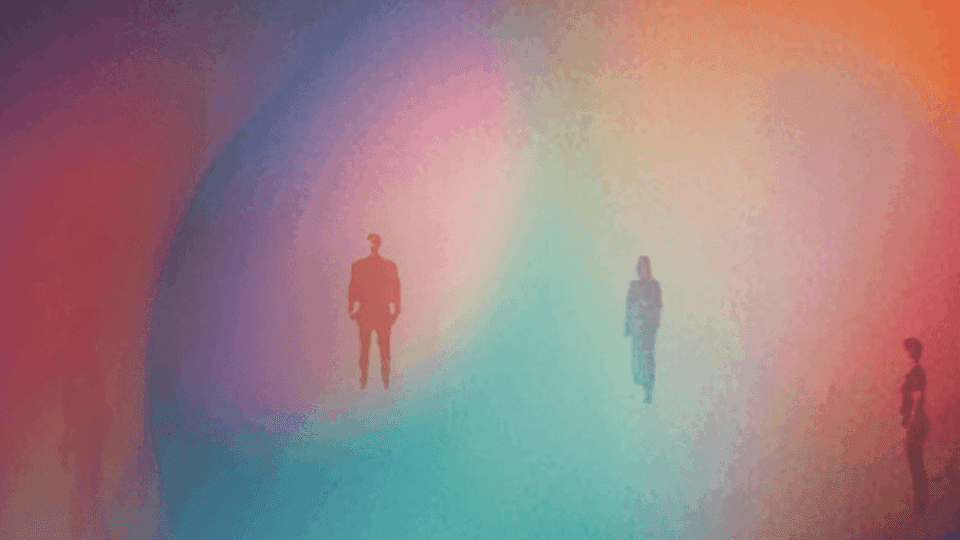
JC: Students curate their own projects and engage audiences in their local communities. So whilst we explore different ways to work with new technologies to bring works together and create online encounters, we might also be understood as a ‘multi-site’ course. Students learn how to document their artworks on the ground and share them with someone who’s not there to meet that print, painting or sculpture in person. We can’t get away from the fact that there are challenges there. But this is a really valuable professional practice skill and we are practicing it together all the time.
KF: When we come to discuss the online showcase, lots of the conversations are around the idea of connections so there’s always this reflection on the rhizomatic nature of the course. I think students are highly aware of how unique that is: that they have this web of connections across time and space as a result of studying here, and they value that as part of their collective identity.
SS: As a Tutor, I enjoy learning how to present work online using Falmouth’s different virtual platforms. I’m also learning, alongside the students, to work out how to address questions of closeness and materiality.
A: Have you seen your online communities lead to meaningful relationships in the physical world?
KF: We’ve had students sending work across the world for exhibitions or group shows they’ve co-organised. They share resources too – travelling to visit each other if they’re in the same county. They are finding ways to support and sustain each other at a distance, which has been brilliant to witness.
JC: Students work with the same enrolment group throughout their two-year journey and often get really close. We have an optional annual in-person gathering, and there are student networks producing projects together beyond the course. There is a growing alumni network that we encourage to stay in touch.
SS: I’m always really pleasantly surprised by the closeness that emerges in the tutor group webinar format, especially in smaller groups. There’s something about “having skin in the game”, everyone committed and having a role to play whether they attend live, or stay in touch via our recordings.
A: What are the strengths of digital collaboration, and how does it compare to working together in person? Are there aspects of creative exchange that can only be realised virtually?
JC: Writers and researchers Fred Moton and Stefano Harney refer to the “irregular polyrhythms” of collaborating at a distance and I think that’s very pertinent to us. We move in and out in different rhythms, but we have these points of contact: weekly live teaching sessions, discussion forums that people can dip in and out of at any time, one-to-one tutorials on our final module. We don’t tend to use the acronym IRL on this course because it’s all real life, whether we’re online or on the ground.
KF: Being an online MA opens up possibilities for different kinds of knowledge to be transferred across time and space, irrespective of geography. But equally, we encourage students to think about the local as a site using their own situated knowledge and what is intimate or close in their environment that can act as a conduit to broader questions. So, we’re thinking about both kinds of context simultaneously.
SS: There’s something about the elasticity between the local and the wider, closeness and distance, and we explore that through our methodologies which can sometimes mean putting students in smaller groups for live teaching so there’s a space to dig in deeper and get to know people.
A: What are the aspects of teaching online that you find most interesting, surprising – or challenging?
JC: Working on this course has made me think about where my research interests intersect with my teaching. On campus, you’re all gathered in person with studios to test things in. But our students are out there doing it whilst they’re enrolled with us. They’re curating their own exhibitions, holding their own in very different locations and testing how their work travels through virtual space. Falmouth has a phrase: doing it for real. Our students are doing that all the way through the course, and beyond.
SS: I’ve also learned a lot about my own pedagogy – learning alongside the students. There’s this closeness that can emerge in the online format that I find genuinely surprising and pleasing.
KF: Students initially find it quite challenging, as there’s a much greater focus on independent learning and peer support. But I’m always impressed by the outcomes we celebrate at graduation. Through the five modules, experimentation and research, students arrive at the end with a real sense of their own agency.
A: What’s next for the MA Fine Art Online at Falmouth?
JC: Watch this space. We’ve got a growing alumni community doing really exciting things. We’re planning our annual in-person gathering in Venice this year; one group of students is making collaborative projects that come to fruition in April; and another group will graduate in May! There’s always the next thing happening. Wherever you are in the world – whether you’re near an art centre or big exhibition space, or not – you should have a way to join the conversations you’d like to be part of. That’s what a good MA should equip you to do, and it’s what we’re aiming for. We’re so delighted to see our students achieving that.
To read more about MA Fine Art Online, visit Falmouth University’s website: falmouth.ac.uk
Find out more about Graduate Showcases here | @falmouth.mafineart.online
Image Credits:
1. Inge Tillere
2. Jo Gelsthorpe
3. Kim Moreland
4. Dave Clarkson
5. Joanna Cruickshanks
6. Kenny Leigh
7. Esther Johnson
8. Khoi Nguyen


