

Canyon, a new institution dedicated to moving image works along with sound, performance and other forms of art, will open this autumn at 200 Broome Street on Manhattan’s Lower East Side, in 40,000 sq. ft of reworked commercial office space. It was founded by the entrepreneur and video collector Robert Rosenkranz.
The institution’s multimedia scope stems from the ever-shifting nature of contemporary art. In the 100 years since avant-gardists like Marcel Duchamp to Dziga Vertov first got behind a camera, the labels used to describe what they created have multiplied in keeping with the technologies they used to make and show it: experimental film, video art, new media, time-based work, moving image, screen-based work, durational work and digital art. And as each successive generation of technology became obsolete, artists have continued to tap their wider potential.
For museums, this rate of change poses significant exhibition and conservation challenges, but curators, collectors and acquisition committee members highlight that these are outweighed by the relevance this art has to contemporary daily life. “I’ve heard people refer to Nam June Paik as digital art,” says Cass Fino-Radin, Canyon’s vice president for art and technology. “It really is just inseparable from contemporary art writ large.”
Accelerating relevance is not the only factor. Work that takes hardly any space at all to store is increasingly attractive to museums bursting at the seams with paintings and sculptures.
Pioneering conservation
The Berlin-based Julia Stoschek Foundation recently held the first major US presentation of pieces from its collection at the Variety Arts Theater in Los Angeles, featuring works by artists including Marina Abramović and Douglas Gordon.
“For a long time, video art played a marginal role in the art world—curatorially acknowledged, but structurally underestimated,” says Julia Stoschek. “It was often considered difficult, secondary or impractical.” Today, she says, “time-based media are widely understood as central to contemporary artistic practice, even if market structures are still catching up to what artists and institutions have already recognised”.
A still from Lu Yang’s 50-minute video DOKU: The Flow (2024), is part of the Julia Stoschek Foundation’s collection Courtesy of the artist
She started her namesake foundation in 2017 to make the collection accessible and foster conservation and research. “Time-based works need an institutional framework that can hold technical knowledge, installation logic and documentation over decades, not seasons,” Stoschek says. “The foundation’s work is increasingly international and collaborative, which is particularly visible in the current Los Angeles project.”
Canyon will neither be home to Rosenkranz’s video art collection nor, for the time being, acquire any work of its own. Rather, as its director Joe Thompson (who was the founding director of Mass Moca) explains, it will extrapolate from Rosenkranz’s long-established way of showing works he owns within his home and bring into the public museum that sense of domestic comfort and hospitality. The museum will not necessarily have a curatorial department either.
“There’s so many great shows around the world that never touch ground in New York,” Thomson says. “The reason for that, particularly for shows that are rich in media that have large spatial requirements, is that the timescale of most of the major museums in New York City is four or five, sometimes six years.” He wants his team to be able to turn things around much more quickly. “We’re going to work in the 18-to-24-months range, staying a little bit loose-limbed.”
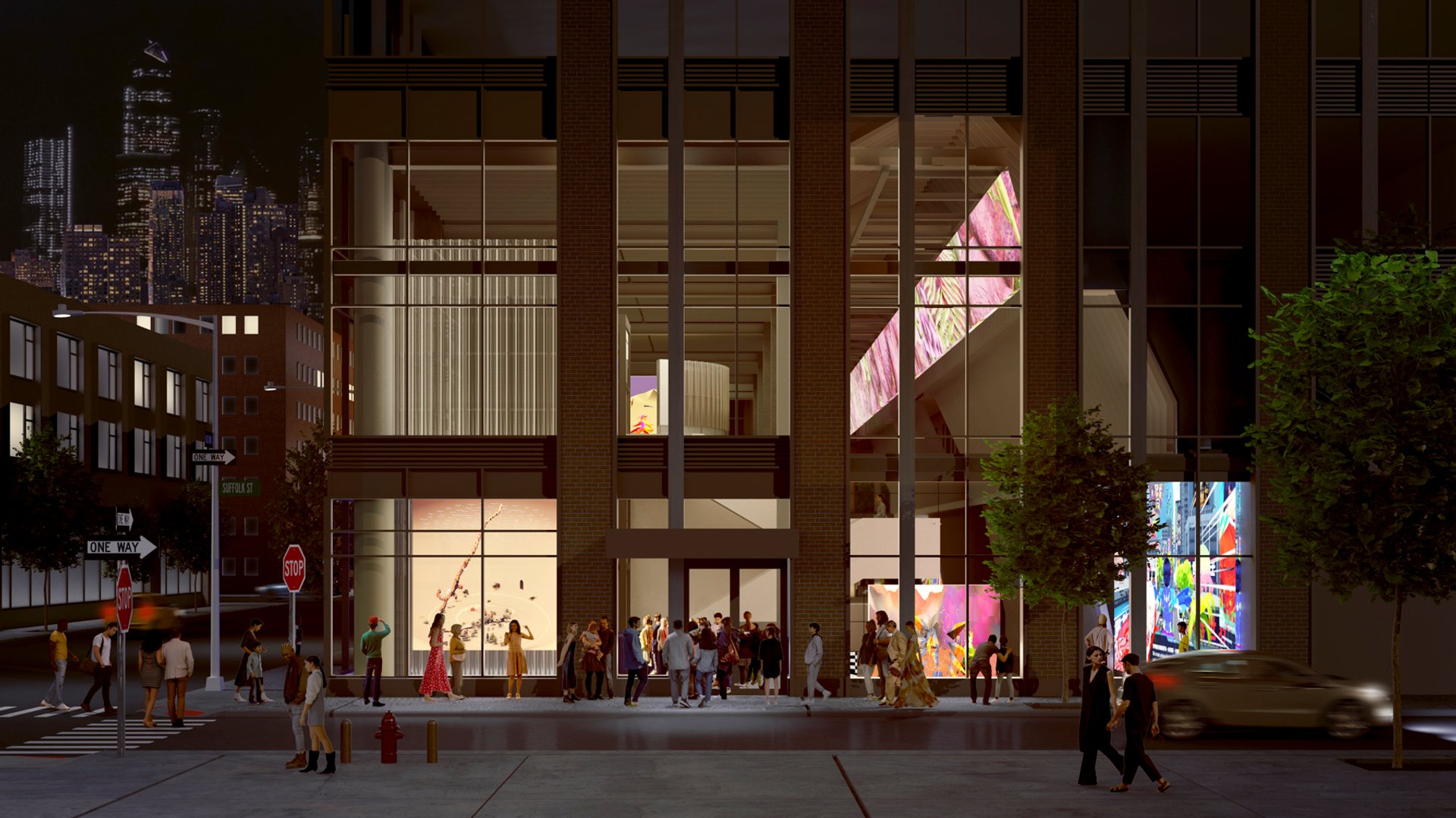
Rendering of Canyon by New Affiliates, featuring works (clockwise) by Ian Cheng, Rebecca Allen, LuYang and Theo Triantafyllidis Courtesy of the artists and Canyon; © New Affiliates.
Not having a collection has not stopped Canyon from thinking seriously about conservation. Finn-Radin conducted a field study in 2022 and found an overwhelming need across US museums for a specialist, independent nonprofit lab; now he is heading up the Canyon Media Arts Conservation Center. It is not just that museums need technicians for hire, he says, “It’s about community-building and facilitating knowledge exchange and knowledge sharing.” This applies to the formats on which the works are kept as well as the machines and display systems by which they are exhibited.
Acquisition logics
Video and time-based media do not have much of a secondary market yet. They are also categories that many commercial galleries shy away from. Collectors focused on these media, like Stoschek and Rosenkranz, are outliers—and they are really invested in the works’ longevity.
In spring 2025, the French collectors Isabelle and Jean-Conrad Lemaître bequeathed the collection they had accumulated over 30 years to the Musée d’Art Contemporain (Mac) in Lyon. The entire museum was mobilised to take reception of the works, 170 pieces in total, amounting to several million euros in value. Matthieu Lelièvre, the Mac’s head of collections, says the entire bequest (save on film piece by Tacita Dean) fit on two large hard drives.
“Video art does not fall within an economy the way a Brancusi might, where the set value of the work dictates that those inheriting the collection must sell it at auction to share out the money,” Lelièvre says. “Fundamentally, the Lemaîtres’ approach speaks to their knowledge of the medium and its place in the market, its evolution and also an awareness of the role they themselves have played in that evolution.”
The Lemaîtres were avid supporters of young artists. Some they bought from early on—their first acquisition was Gillian Wearing’s Boytime (1996)—are now in their fifties, and they are not all famous. Often, in buying a first edition of a video, they were enabling the artist to finish the work. A current exhibition at the Mac, Regards sensibles [Sensitive Gazes] (until 12 July), will give visitors a sense of the collection, which Lelièvre describes as “the most beautiful in France, and one of the best in the world, in private hands”.
Digitisation, in the case of the Lemaître collection, has already been done. Some artists sold their works on DVD; others, in multiple formats (reels of film, USB keys, digital Betacam tapes, HDCam tapes, hard drives), along with detailed protocols of how they should be exhibited. That shifting technological landscape has been accompanied by significant changes to privacy law, meaning consent from whomever an artist shot in the 1990s won’t have been obtained the way current legal frameworks require. Any conservation work therefore starts with contacting all the artists.
“I worry about the things that haven’t been shown in a decade or more, and maybe the artist is reaching the final era of their career, and it might be your last moment to exercise that knowledge with the artist standing right next to you,” Fino-Radin says.
Domain expertise
In May 2025, the master recordings of more than 200 of artist Bill Viola‘s moving-image works were donated to the George Eastman Museum in Rochester, New York, an institution specialised in long-term preservation for film. Gordon Nelson, an assistant curator for the digital collection at the George Eastman Museum, points out that Viola’s oeuvre encompasses the history of video art technology from the early 1970s until the mid-2010s. The institution is now painstakingly backing up the digitised files onto its storage system. This exacting process points to another conservation challenge: with anything digital, the potential for it to be copied is ripe.
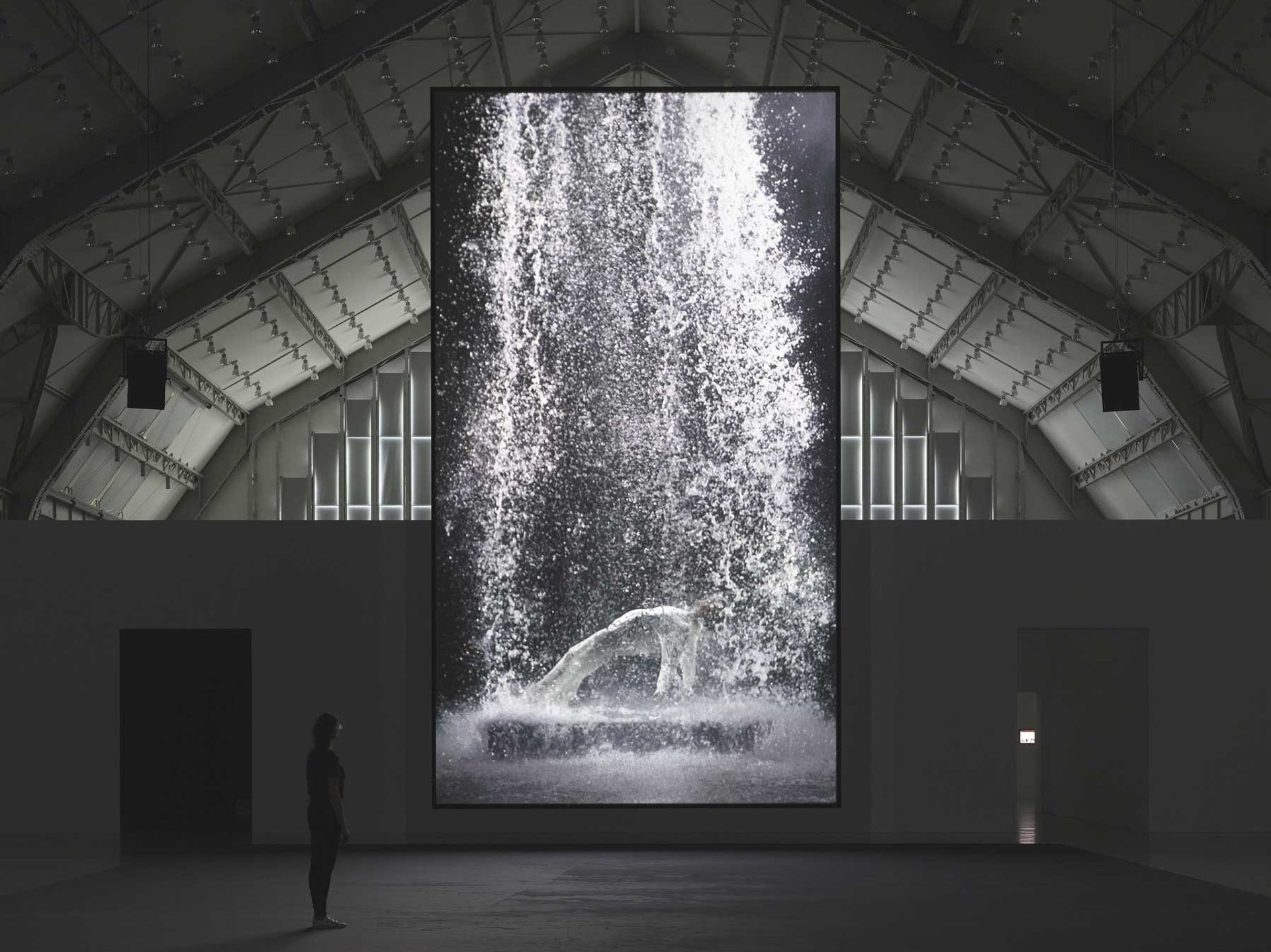
Bill Viola’s Tristan’s Ascension (The Sound of a Mountain Under a Waterfall) (2005) Courtesy Deihtorhallen, Hamburg
As a backup method, the museum uses Linear Tape-Open (LTO), a digital tape format that, Nelson says, extracts a lot of metadata automatically and enables them to copy the work in a very ethical way. “It takes a sort of digital fingerprint of the file, which enables us to track it,” he says. “Thirty years from now, someone will be able to tell if that’s the exact data that we captured initially. Once you write a tape, it goes on to a shelf. It’s not online. It can’t get a virus. It’s as close as we can get to a feeling of relief that the object is backed-up using the best system we have available to us.”
The collector and tech entrepreneur Craig Hollingworth, who founded the Anarchy Art Club, has sat on the Tate’s North American acquisition committee for nearly four years. He says every set of works the committee has considered in that time has included a digital element.
“If you’re a huge museum and you’re fighting off donations each year of various paintings from donors that want their legacy to live on, that would be quite a big headache,” Hollingworth says. “Digital art is quite appealing because it doesn’t need to be stored in a way that a traditional painting might.”
Lelièvre concurs: “It’s a potential response to the storage crisis: we’re all panicking because our reserves are full.”
This wide-ranging category of time-based and moving-image art, then, is not just of the moment but also points to the future. To Hollingworth’s mind, as artificial intelligence slop floods our phones and attention spans, the value of screen-based work “made by human hands” is only going to increase. Institutions like Canyon are being built specifically to show and secure that work.


