

A pair of almost unknown Van Gogh sketches from the last weeks of the artist’s life has emerged. The double-sided sheet is to be sold by Christie’s in Paris on 17 April, with an estimate of €100,000-€150,000.
The drawings have only been exhibited once, for just a month in Argentina in 1959. A very brief entry on them appeared in the 1970 de la Faille catalogue of Van Gogh’s work, but without illustrations; the sketches were excluded from the 1980 Hulsker catalogue. Now that they have finally emerged, their authenticity has been confirmed by the Van Gogh Museum.
Van Gogh’s Pickers of Peas (Cueilleuses de pois) (June 1890)
Christie’s
The main side of the double-sided sheet depicts two groups of female pea pickers, bending over in a field. Pickers of Peas was drawn in Auvers-sur-Oise, just north of Paris, where Van Gogh lived from May 1890 until his death that year on 29 July. At that time peas were grown in the fields between the main road and the River Oise.
We can get an idea of the scene which Van Gogh must have observed from a painting by a slightly earlier artist, Charles Beauverie. In 1876 he depicted female pea pickers in the very same village. An engraving was made of another similar pea-picking scene by Beauverie and Van Gogh may well have known that print.
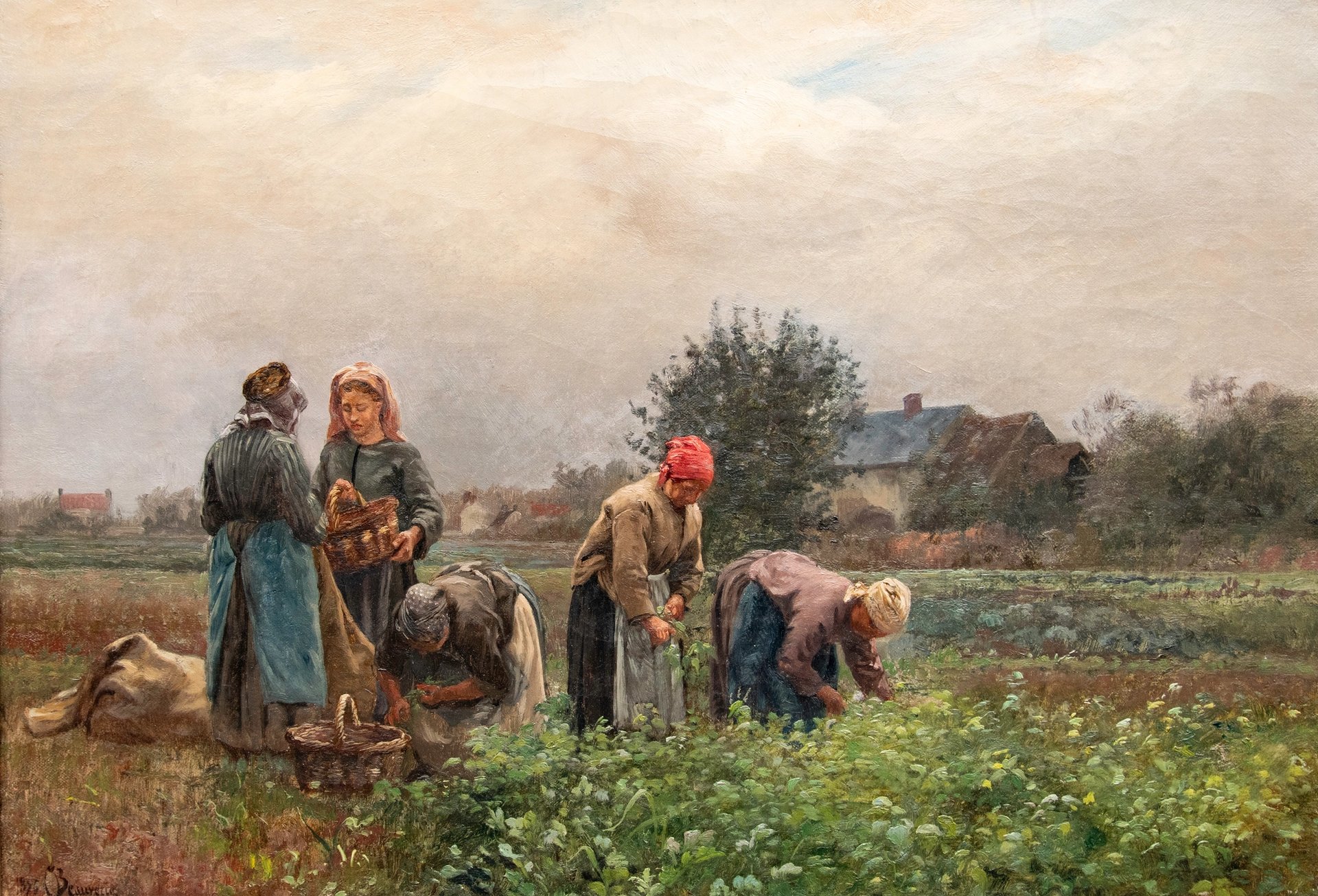
Charles Beauverie’s Picking Peas at Auvers-sur-Oise (1876)
© Tomaselli Collection, Lyon (Jérôme Tomasell)
On the reverse of Pickers of Peas is a landscape sketch, depicting two rows of trees on either side of a field. Hills and a cloud are in the background.
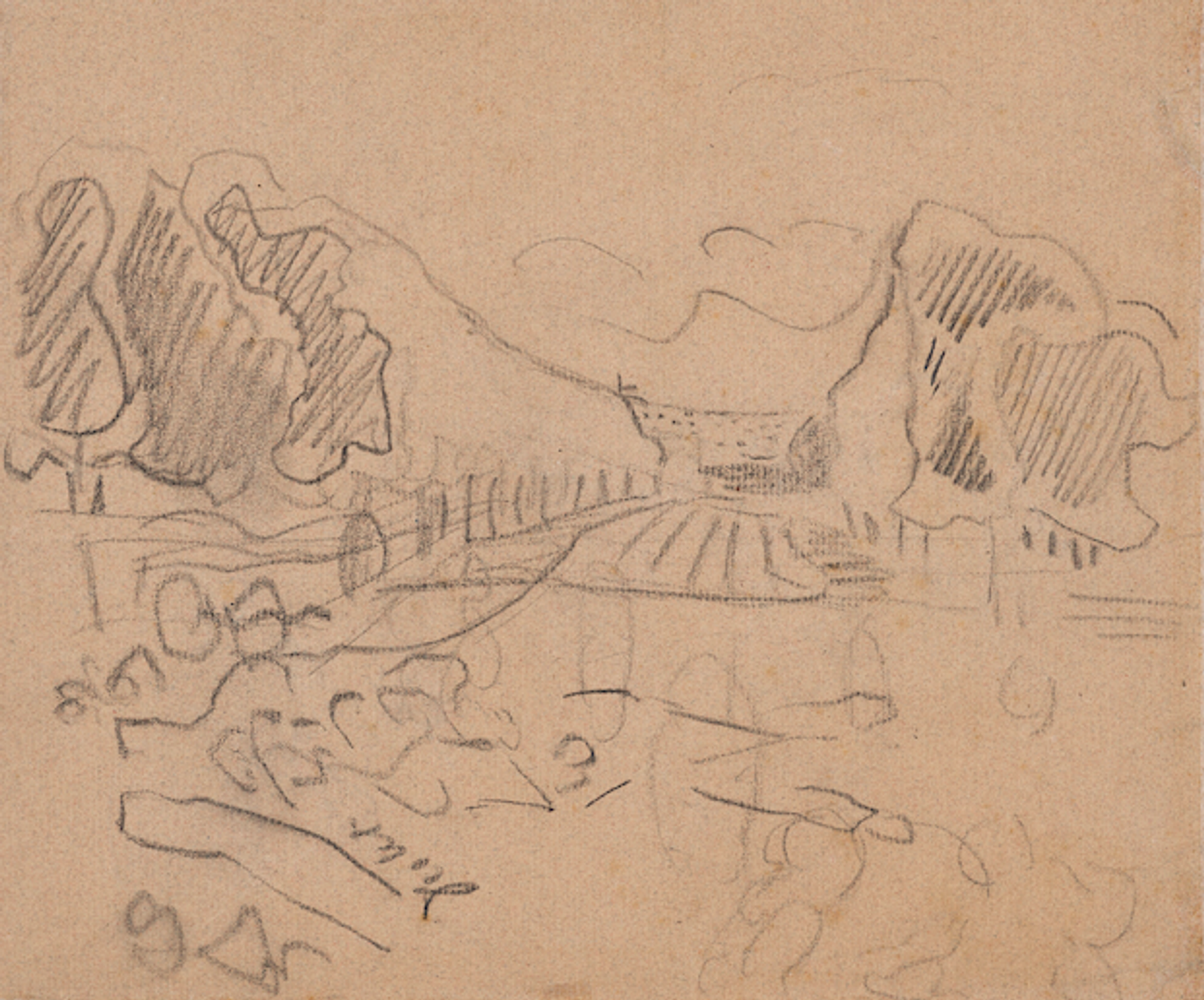
Van Gogh’s Study for a Landscape (Esquisse d’un paysage) (June 1890), the reverse of Pickers of Peas
Christie’s
The Pickers of Peas drawing has six colour notations inscribed by Van Gogh, ranging from “vert bleu” (green blue) to “jaune” (yellow). On the landscape, which is on the reverse of the pea pickers, there is a single word, “violet”. These inscriptions show that Van Gogh had intended to use his sketches as the basis for oil paintings.
No such paintings survive. Van Gogh may never have started working on the compositions or he may have abandoned them. It is also just possible that he completed the paintings and they have since been lost.
One oil painting which bears some superficial similarities to the landscape sketch is Les Vessenots in Auvers (June 1890). This was certainly not painted from the sketch, but it could possibly represent the same neighbourhood.
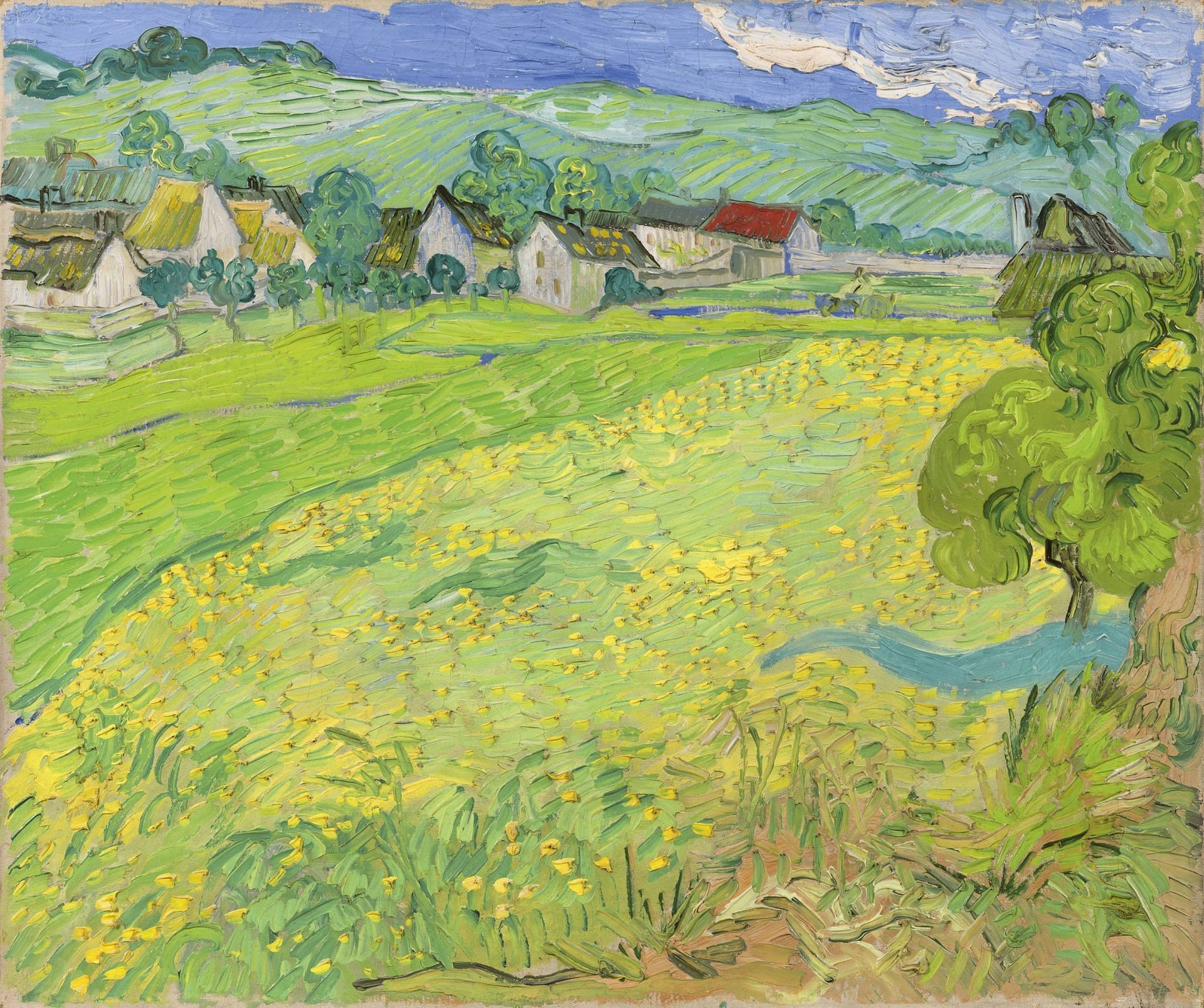
Van Gogh’s Les Vessenots in Auvers (June 1890)
© Museo Nacional Thyssen-Bornemisza, Madrid
The Christie’s double-sided drawing was first acquired by Dr Paul Gachet, who looked after Van Gogh during his stay in Auvers-sur-Oise and cared for him after he shot himself in the chest. The doctor was given the sketch by Van Gogh or acquired it just after the artist’s death. Dr Gachet apparently hung the sketch in his house, along with other Van Gogh drawings he owned.
Dr Gachet’s son, also called Paul, sold the double-sided drawing in 1954. After passing through a Buenos Aires collection, in 1990 it went to a Spanish owner, whose descendants are now selling the work at Christie’s.
Altogether ten of Van Gogh’s Auvers-sur-Oise sketches have colour annotations, but no oil paintings based on them are known to have survived.
The fact that Van Gogh made these preparatory drawings for future paintings suggests that at this time he had no intention of ending his life. Sadly, the paintings never seem to have been realised.
Other Van Gogh news
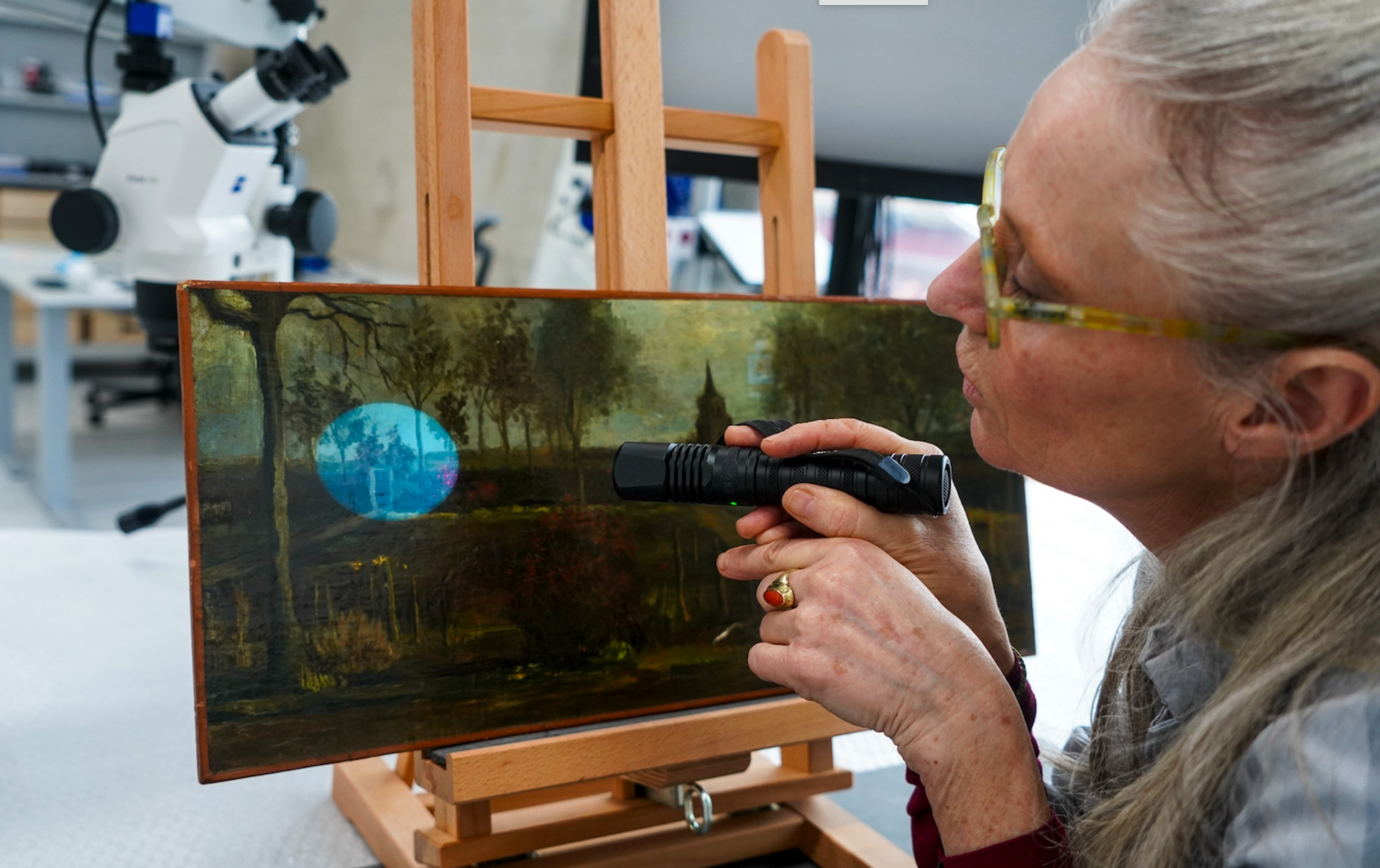
Conservator Marjan de Visser working on The Parsonage Garden at Nuenen in the Spring (March 1884)
Groninger Museum, Groningen (photograph Denzel Feurich)
Van Gogh’s painting The Parsonage Garden at Nuenen in the Spring (March 1884) went back on display this week at the Groninger Museum, in the north of the Netherlands, following its recovery after a theft. The painting had been stolen on 30 March 2020 while on loan to the Singer Laren museum. It was recovered on 11 September 2023 in Amsterdam, delivered in an Ikea bag.
The painting was restored before this week’s redisplay. Two very small areas of loss at the bottom of the picture which had been damaged during the theft were filled and retouched. Discoloured old varnish was removed, making the picture brighter.
Conservator Marjan de Visser also discovered that the face of the woman in the centre of the composition had been radically changed after the artist’s death, by adding her features. Van Gogh had given her a blank face, with no facial features (as he did occasionally).
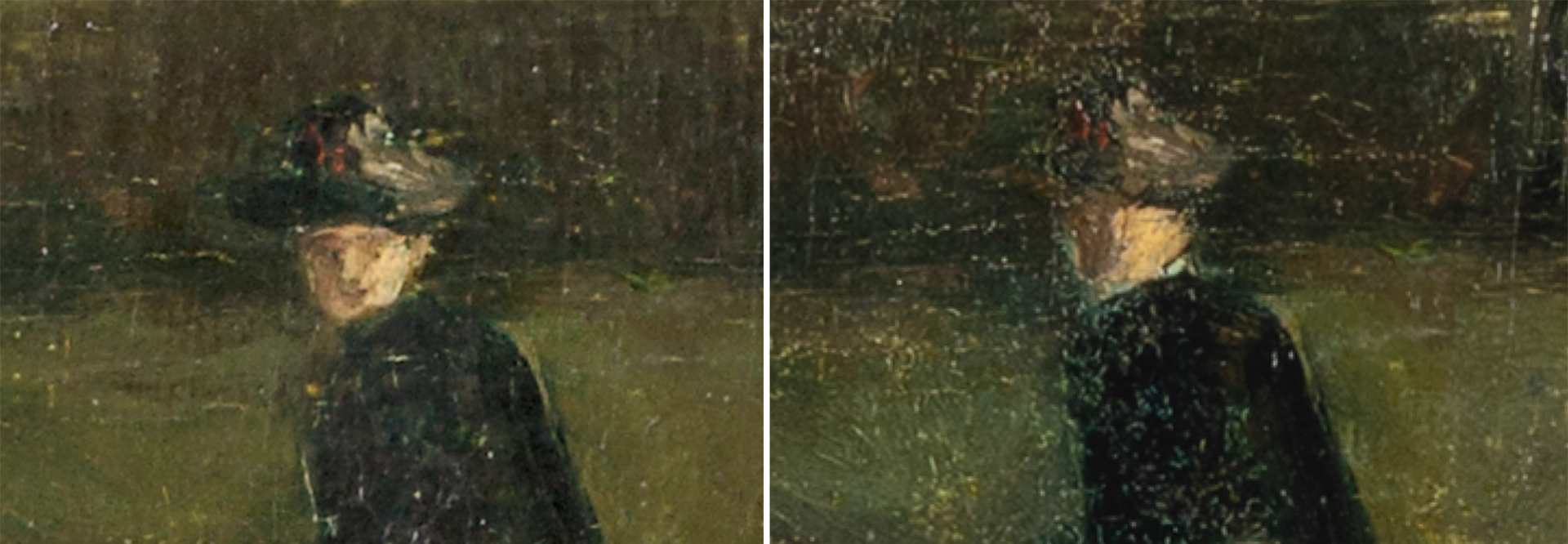
The woman’s face, before restoration (with facial features added in 1903) and after restoration (as Van Gogh depicted her, in 2026)
In 1903, when the picture was to be exhibited at Rotterdam’s Oldenzeel gallery, the mouth, nose and eyes were painted onto the face, probably by the amateur artist Andrianus van Loon. This was presumably done to make the picture more marketable. Now the painting is once again on display at the Groninger Museum, closer to how Van Gogh had intended it to be.
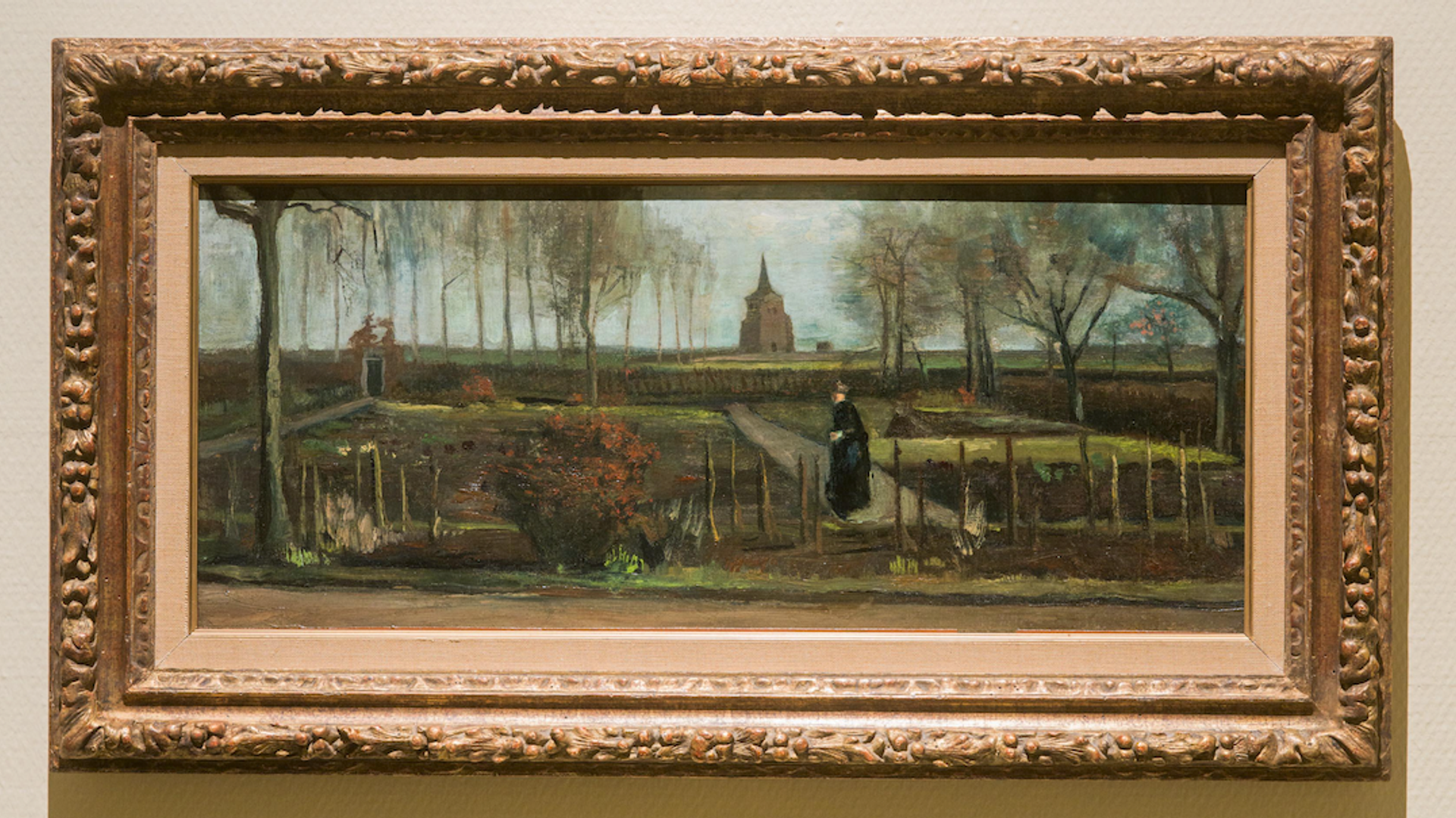
Van Gogh’s The Parsonage Garden at Nuenen in the Spring (March 1884), back on the wall after conservation
Groninger Museum, Groningen
Martin Bailey is a leading Van Gogh specialist and special correspondent for The Art Newspaper. He has curated exhibitions at the Barbican Art Gallery, Compton Verney/National Gallery of Scotland and Tate Britain.
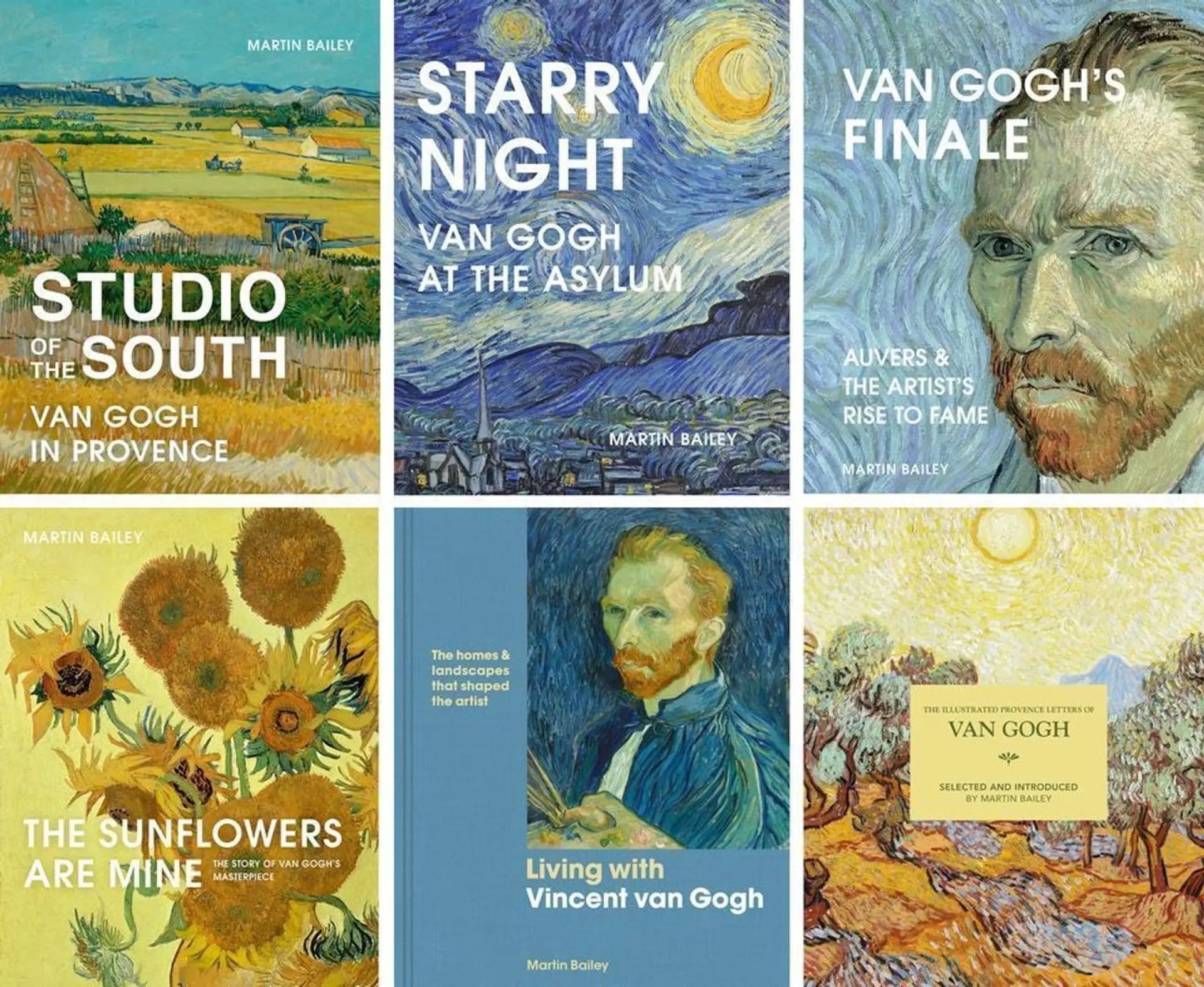
Martin Bailey’s recent Van Gogh books
Martin has written a number of bestselling books on Van Gogh’s years in France: The Sunflowers Are Mine: The Story of Van Gogh’s Masterpiece (Frances Lincoln 2013, UK and US), Studio of the South: Van Gogh in Provence (Frances Lincoln 2016, UK and US), Starry Night: Van Gogh at the Asylum (White Lion Publishing 2018, UK and US) and Van Gogh’s Finale: Auvers and the Artist’s Rise to Fame (Frances Lincoln 2021, UK and US). The Sunflowers are Mine (2024, UK and US) and Van Gogh’s Finale (2024, UK and US) are also now available in a more compact paperback format.
His other recent books include Living with Vincent van Gogh: The Homes & Landscapes that shaped the Artist (White Lion Publishing 2019, UK and US), which provides an overview of the artist’s life. The Illustrated Provence Letters of Van Gogh has been reissued (Batsford 2021, UK and US). My Friend Van Gogh/Emile Bernard provides the first English translation of Bernard’s writings on Van Gogh (David Zwirner Books 2023, UKand US).
To contact Martin Bailey, please email vangogh@theartnewspaper.com
Please note that he does not undertake authentications.


