

What does freedom truly mean? How has our definition changed over the past 80 years? Do we have the same privileges today that our parents or grandparents had? Our Freedom: Then and Now, developed by Future Arts Centres and Open Eye Gallery, brings together stories of participants from 60 locally led projects across the UK. The images were captured by 22 photographers who followed each project closely, featuring a diverse range of people aged 0-100, including school children, veterans and artists. The result is a tapestry of personal experience, weaving together disparate ideas of what ideas of liberty, justice and equality mean in our current moment, when it often feels like personal and political freedoms are being rolled back. We spoke to Liz Wewiora, one of the show’s curators, about what community collaboration and socially driven projects can bring to the contemporary art scene.
A: Take us back to the start. How did this exhibition come about?
LW: Open Eye Gallery was approached by Future Arts Centres to undertake the photography exhibition commission. We have a history of programming which celebrates socially engaged and community led photographic practice and the Our Freedom project resonates really strongly with. The gallery coordinates a national initiative SEPN (Socially Engaged Photography Network), which is made up of over 500 members and organisations who all feel passionately about championing socially driven arts practice. It was hoped that through this network we could reach out and work with an authentically diverse, geographically relevant and creative mix of photographers for this commission.
A: The show brings together works from 60 communities across the UK. How did you approach curating such a diverse body of material?
LW: The curation of the project was all about collaboration – from the photographers and their key insights into the people they met along the way; from the venue partners to ensure our descriptions of each group was a fair and accurate representation; and with each other as a team. Of course, the aesthetic of each image is important for the curation, but we also needed to curate from the perspective of inclusion, diversity of voice and geography. It was about ensuring a range of imagery and community were covered throughout each display, both at the Southbank Centre and what will be going on to tour in a series of three rotating exhibitions across the country. This can be a complicated process, but it was also a joyous one, as the range of different approaches the photographers took working with each venue was so vast.
A: Were there any surprises or challenges that came with curating the exhibition?
LW: There are the inevitable challenges with projects of this nature. When you are working in partnership with venues who are running community led and socially engaged projects, unexpected changes to the delivery timeframe are common. Participants are busy, things come up, dates need to change and the photographers need to adapt and, in some cases, had very little contact time to work with the people they met. This was a particularly interesting challenge for our photographers, who often prefer to work on longer term socially engaged projects themselves, meaning it can feel like the engagement is too fleeting. This, of course, then has a knock on effect for the curatorial team receiving all the work, and there is a hesitancy to start curating without all the images ready to see – as one single shot can affect that way you might select or display the next. We also had the challenge of editing “out,” as with 60 venues and 22 photographers, there came a lot of strong imagery, and we could only show a fraction of the work in reality. That is why we wanted to offer a digital showcase and website exhibition, so we could ensure a greater diversity of work could be shown alongside the physical displays.
A: How do you balance the role of the curator with the agency of the communities involved?
LW: Each venue partner was already delivering their own participatory programmes with local communities, so it was important that the photographers leant into that locally-rooted knowledge and existing partnership work. Each photographer would have a planning meeting or pre-meet with each venue to discuss the communities involved in their programme. Then the artist would offer creative ideas to engage with those communities through photography in a way that could both represent the people involved, but also the broader project themes. Some leaned more into the individuals, others focused on the relevancy of the place and spaces involved. Photographers would share the imagery back with the community members to ensure they were happy before a final selection came to Open Eye Gallery.
A: “Freedom” is a word that carries both historical weight and contemporary tension. What emerged when communities reflected on what freedom meant in 1945 compared to now?
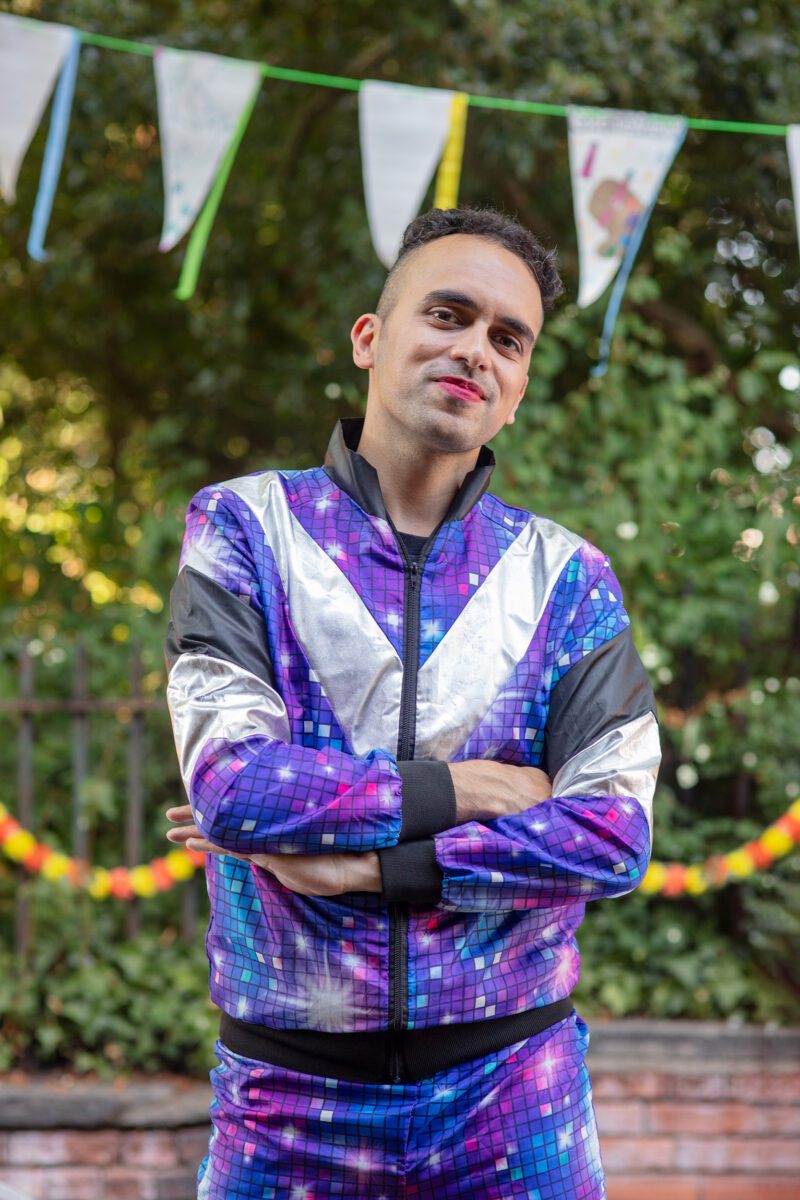
LW: Some of the most interesting work came from projects where participants were able to handwrite or weave in text or audio about their concepts of freedom. What stood out from these pieces was the individual concepts of what freedom means to us all, both historically and now. Rosie Barnes worked with participants from JW3, also known as Jewish Community Centre London, who all reflected on relatives affected or lost during WWII. Their testimonies were extremely moving and revealed so much about those people and their individual life stories, which often remain hidden under the wider tragedy and trauma of the Holocaust. Elsewhere, some of LGBTQIA+ and younger people engaged through the project – such as photography sessions with Chad Alexander, Carole Evans, Sophie Ellen, Johannah Churchill and Tadgh Devlin – focused on how we can express concepts of freedom through appearance and performance. Contributors ranged from early childhood to centenarians, and they came from every corner of the UK, and from diverse cultural backgrounds – reflecting the wider shows concepts of Freedom: Then and Now. Something which came through from all of the projects was that freedom is ultimately about feeling you can have choice over your life. To be free to live, move, express ourselves and live in peace amongst each other, acknowledging differences but respecting common ground.
A: Do you have a particular favourite from the project?
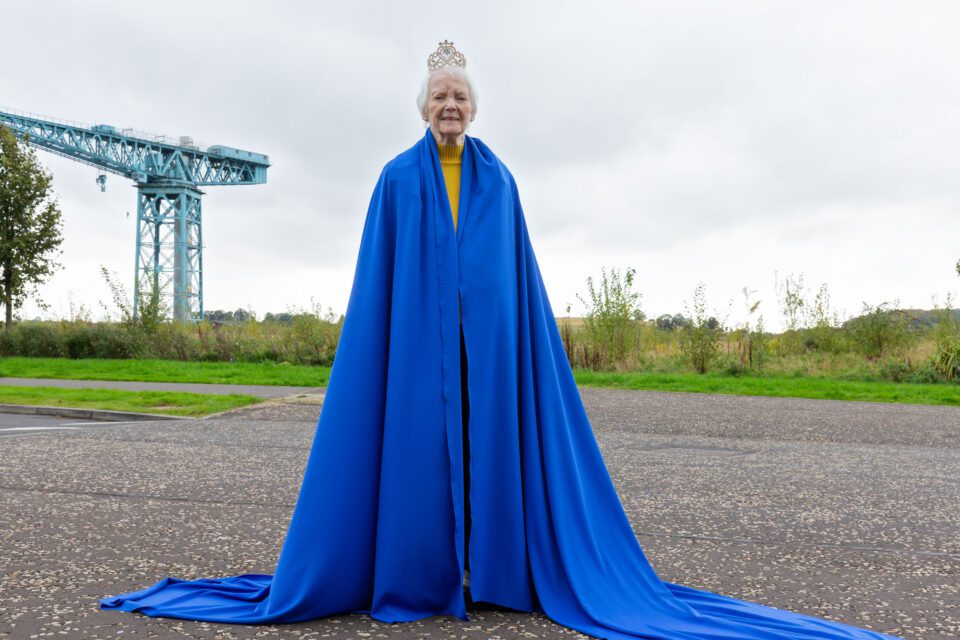
LW: I think it is really hard to offer one particular favourite because of the wide range of photographic styles and approaches that are included. There is something for everyone in terms of the type of photography people might engage with or be particularly drawn to. There is some stunning portraiture by photographers like Alicia Bruce, Sophie Ellen and Joanne Coates, playful collages and fun staged imagery by Karina Lax, Carole Evans, Tadhg Devlin, and a powerful use of photography and text from Rosie Barnes, Emma Case and Seem Khalique. We hope the audience enjoy the different types of imagery as much us.
A: After spending so much time with these stories, has your own understanding of freedom shifted?
LW: The project is a reminder that freedom is a relative term to all of us. Some of us have much greater freedom in our life than others, based on where we have grown up or our social, economical or cultural context. So the project has allowed us to appreciate what we do have in life, and what we strive for, for others. Equally there are always things in all of our lives which can threaten our freedom regardless of where we come from. What the project demonstrates is the diversity of ways people can find freedom in creativity, self-expression and resilience. The exhibition reflects a nation of people who are fighting to ensure voices are heard – whether they from our past, from those lost, or for the generations to come.
Our Freedom: Then and Now is at Southbank Centre, London from 18 March to 25 April: southbankcentre.co.uk
Words: Emma Jacob & Liz Wewiora
Image Credits:
1. Shar Cootie, Colchester Arts Centre – Sophie Ellen Lachowycz @sophieellenphoto.
2. Colchester Arts Centre – Sophie Ellen Lachowycz @sophieellenphoto. Bunting created in community workshops with artist Clare Marsh.
3. Vijay Patel Colchester Arts Centre – Sophie Ellen Lachowycz @sophieellenphoto.
4. Image by Anneleen Lindsay with West Dunbartonshire Council, Clydebank.


