

Alfred Freddy Krupa works in ink, a medium through which questions of history and responsibility come sharply into focus. His practice emerges from a distinct artistic lineage, turning it into something fresh and modern, testing what that legacy can mean in the present. His studies in Zagreb provided a grounding in European modernism, whilst time spent in Japan introduced him to the discipline and restraint of Japanese aesthetics. Krupa developed a visual language out of these experiences, that treats tradition less as something to safeguard than as something to examine, unsettle and reshape.
Krupa’s involvement in the arts stems from a childhood immersed in creativity. His grandfather, Alfred Krupa Sr., was not only a defining figure in Krupa’s life, but a seminal member of the Art of the Croatian Antifascist Movement – a major resistance force during WWII. He also studied under prominent professors Jozef Mehoffer and Jozef Pankiewicz in Krakow during the 1930s, situating his practice within a broader Central European modernist tradition. This legacy left a lasting imprint on Krupa, linking artistic discipline with cultural and historical awareness from an early age. The artist describes how growing up in a creative family shaped his trajectory: “This setting was imbued with the smell of turpentine and oil paints, the rustle of paper and dialogues about history and social change.”
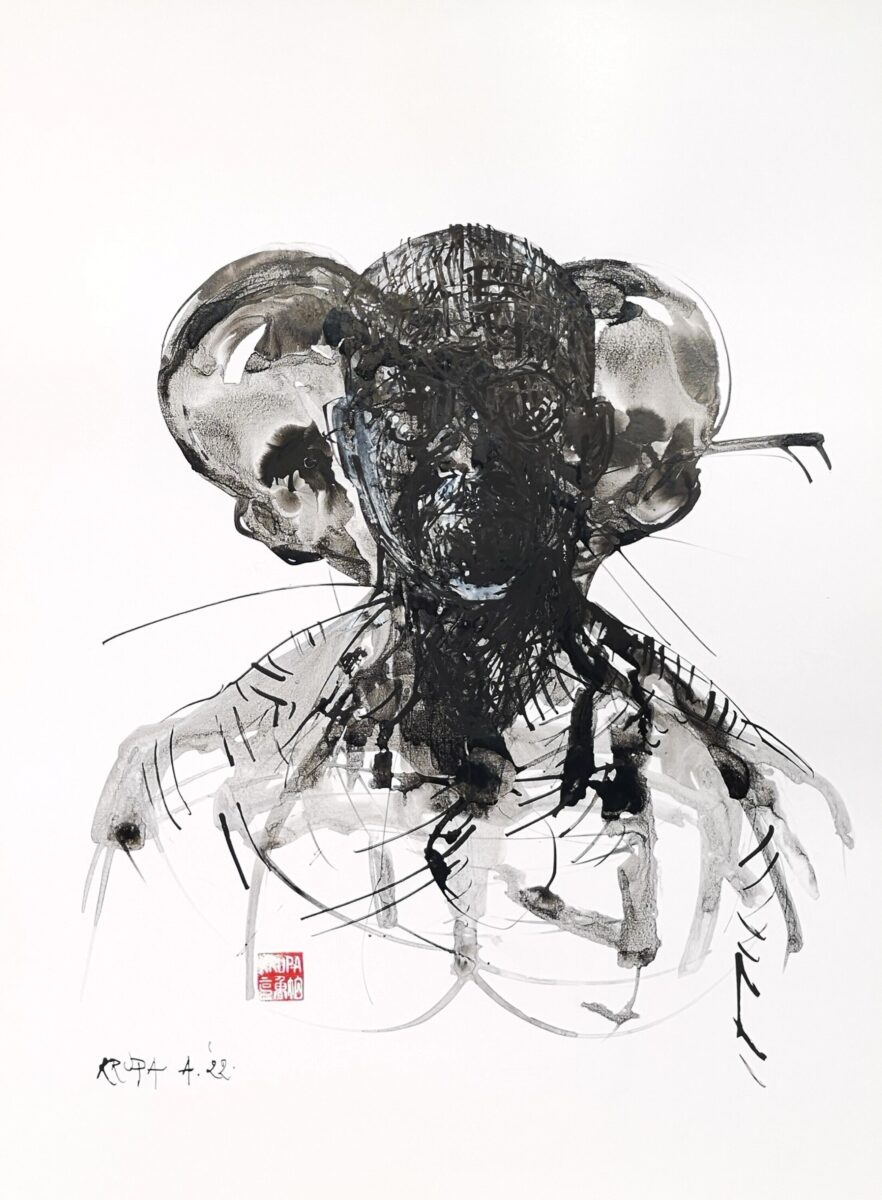
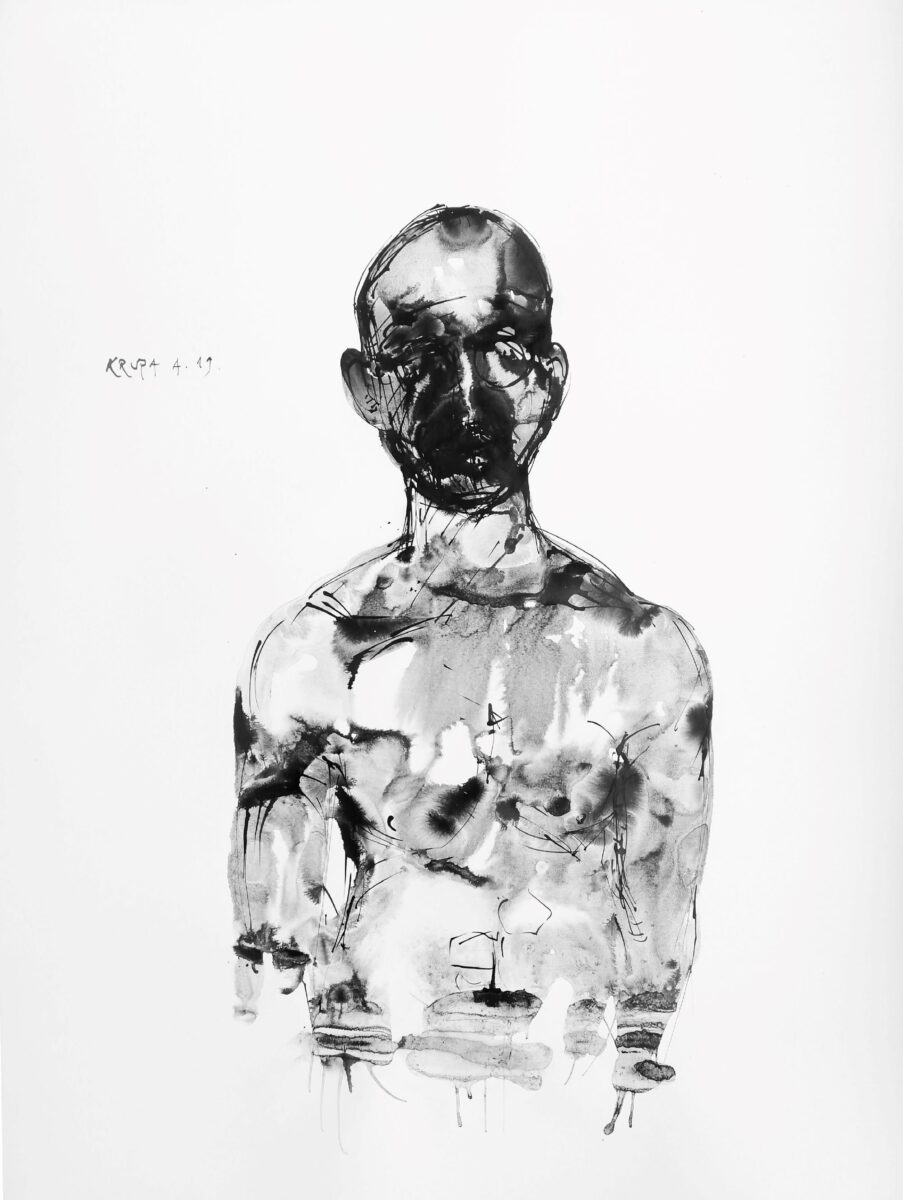
It is not surprising, then, that Krupa’s artistic education and practice is deeply rooted in tradition. He graduated from the Academy of Fine Arts at the University of Zagreb in 1995, before departing for Tokyo Gakugei University in 1998. It was here that his visual language began to flourish, influenced by Japanese minimalist aesthetics and line drawing techniques. His early experimentations with blending these well-established methods with the vibrancy of Western expressionism made him a pioneer of the New Ink Movement, which emerged in the mid-20th century as a response to shifting cultural and artistic landscapes. Artists sought to preserve the essence of classical ink, whilst adapting it to contemporary contexts, allowing traditional art forms to evolve and resonate in the modern world.
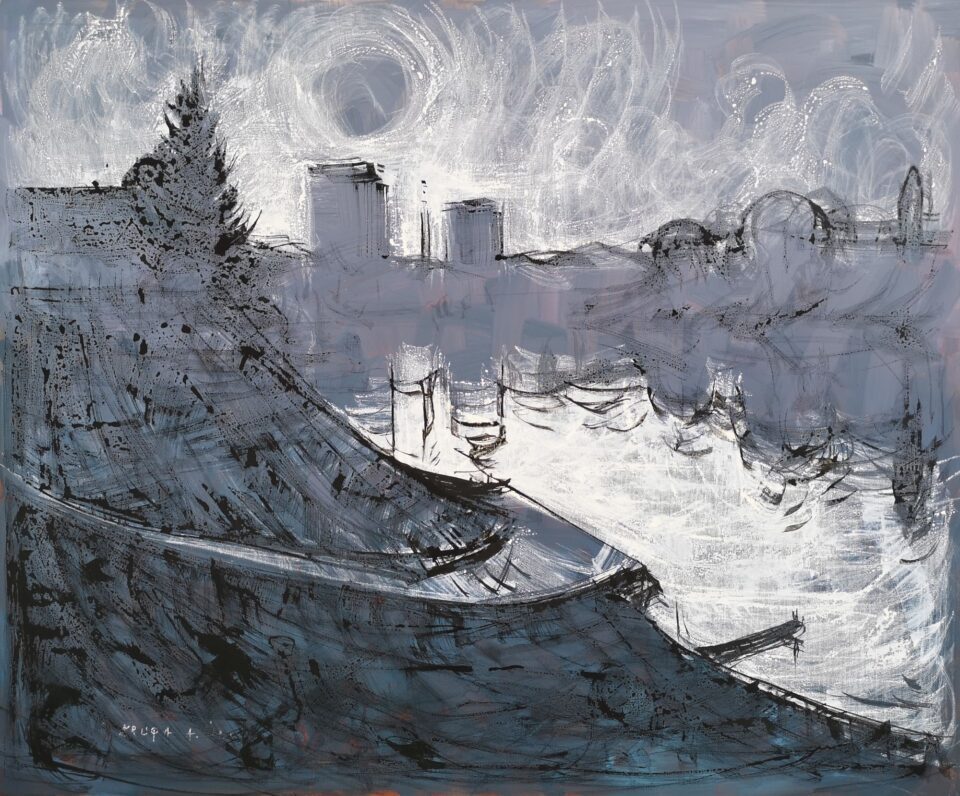
The artist uses this technique to engage with pressing contemporary themes like identity, environment and the intersection of tradition and modernity. He states: “My practice uses drawing as an ethical and political instrument, mapping attention, violence, and care across inner and social landscapes. Through minimal gestures and sustained observation, I question power, authorship and visibility. The work insists on responsibility: to history, to the present moment and to the act of looking itself.” His bold swirls of black ink have a confident immediacy, described by critic Jeffrey Grunthaner as “an expressive seismograph.”
Krupa is a true artistic innovator, reflected in the fact that his work is held in the Museum of Modern Art, New York, the Silesian Museum, Katowice and the National Watercolour Museum, Mexico, as well as part of a special collection at Tate Britain, London. The artist treats tradition as material to be rested and reconfigured into something new and exciting, creating a constant negotiation between past and present.
Find out more about the artist here: @kruppaaf
Words: Emma Jacob
Image Credits:
All images courtesy of Alfred Freddy Krupa.


