

Lee Bontecou, Untitled (1980-2001)
Price on request
Ortuzar and Marc Selwyn Fine Art
It took the American sculptor and printmaker Lee Bontecou two decades to create this meticulously realised tour de force. Measuring around 2m wide, the hanging steel, porcelain, mesh, silk and wire sculpture was first shown to the public in the artist’s 2003 retrospective at the Hammer Museum in Los Angeles. Two of the artist’s similarly sized late-period sculptures are in the collections of the Museum of Contemporary Art in Chicago and the Museum of Modern Art in New York. This work can be seen as a culmination of several lines of inquiry for Bontecou, whose father invented the first all-aluminium canoe and whose mother worked with submarine transmitters in the Second World War. In 1956-57, the award of a Fulbright scholarship allowed Bontecou to work in Rome, where she experimented with terracotta and wire mesh and was introduced to the work of the Futurists. Noting a growing interest in the artist’s sculpture from institutions and private collectors, Ortuzar and Marc Selwyn Fine Art are showing the piece together with smaller works by Bontecou in a range of materials, including a graphite drawing on paper from 1965 and a welded steel, canvas, wire and velvet wall relief from 1959.
Photo: Pauline Shapiro; © 2025 C. Herscovici/Artists Rights Society (ARS), New York
René Magritte, Untitled (1926)
Around $4M
Di Donna Galleries
This pasted paper, gouache and watercolour on paper comes fresh from the exhibition Histoire de ne pas rire. Le Surréalism en Belgique, at Bozar, in Brussels. It marks the first time René Magritte included his bowler-hatted male figure in his collage practice, having started experimenting with paper collages only a year earlier. Once owned by the Belgian Surrealist’s brother Raymond and then his niece Arlette, the diminutive work left the family in 1993, going to the Belgian collector and dealer Maurice Keitelman. The tree-cum-bilboquet motif was also a newly developing theme in Magritte’s paper-based practice, but perhaps the biggest hint of what was to come was the artist’s use of music sheets to render the male silhouette and the outsized child’s cup-and-ball toy. The artist’s catalogue raisonné shows that most of the pasted music sheets in the works from this era came from The Girls of Gottenberg, an Edwardian musical comedy by George Grossmith Jr and L.E. Berman. The collage will be included this November in the Royal Museum of Fine Arts Antwerp’s survey, Magritte. La Ligne de Vie.
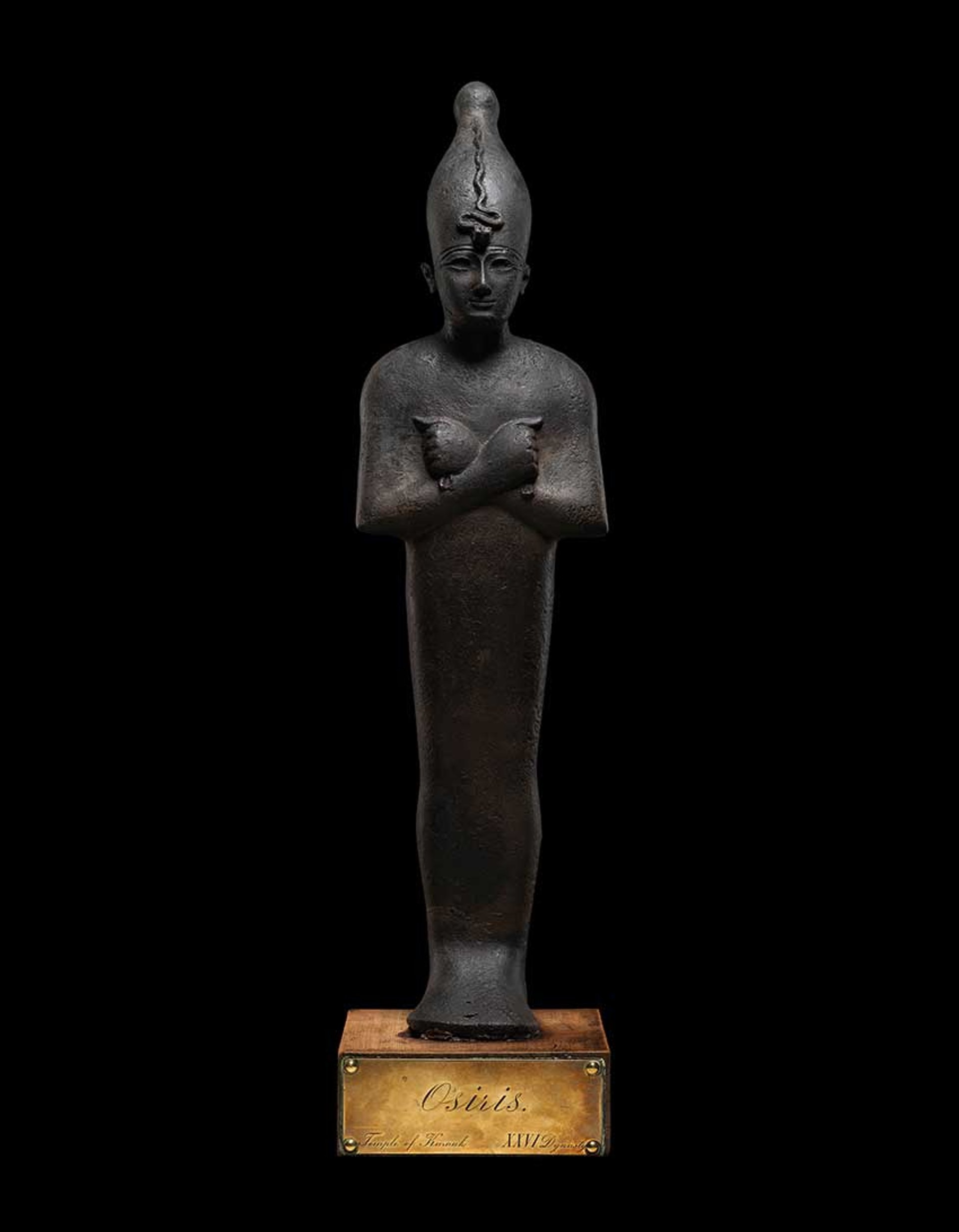
The Blanchard Osiris (around 664-332BC)
£475,000
David Aaron
A British family acquired this bronze statue of Osiris in 1911 from the American dealer Ralph Huntington Blanchard, who operated a Cairo-based antiques business called Blanchard’s Egyptian Museum. The god of the afterlife, death and resurrection measures 55cm tall—a rare comparison in scale to the Metropolitan Museum of Art’s own Osiris. In relatively pristine condition, except for a missing false beard, the figure wears the White Crown of Upper Egypt and is depicted with facial traits characteristic of a statue of this period, such as thin eyebrows over oval eyes and accentuated contours. The London gallery David Aaron, which makes its Tefaf York New debut this year, acquired the statue from the family that owned it for three generations; in-house conservators subsequently undertook its delicate restoration. “Conservation techniques in the 1910s were much more intrusive,” says the gallery’s director, Salomon Aaron, of the work’s previous condition, which included a lacquer coating. The restoration revealed that the original bronze surface was in perfect condition—“extremely rare today for Egyptian materials in this size”.
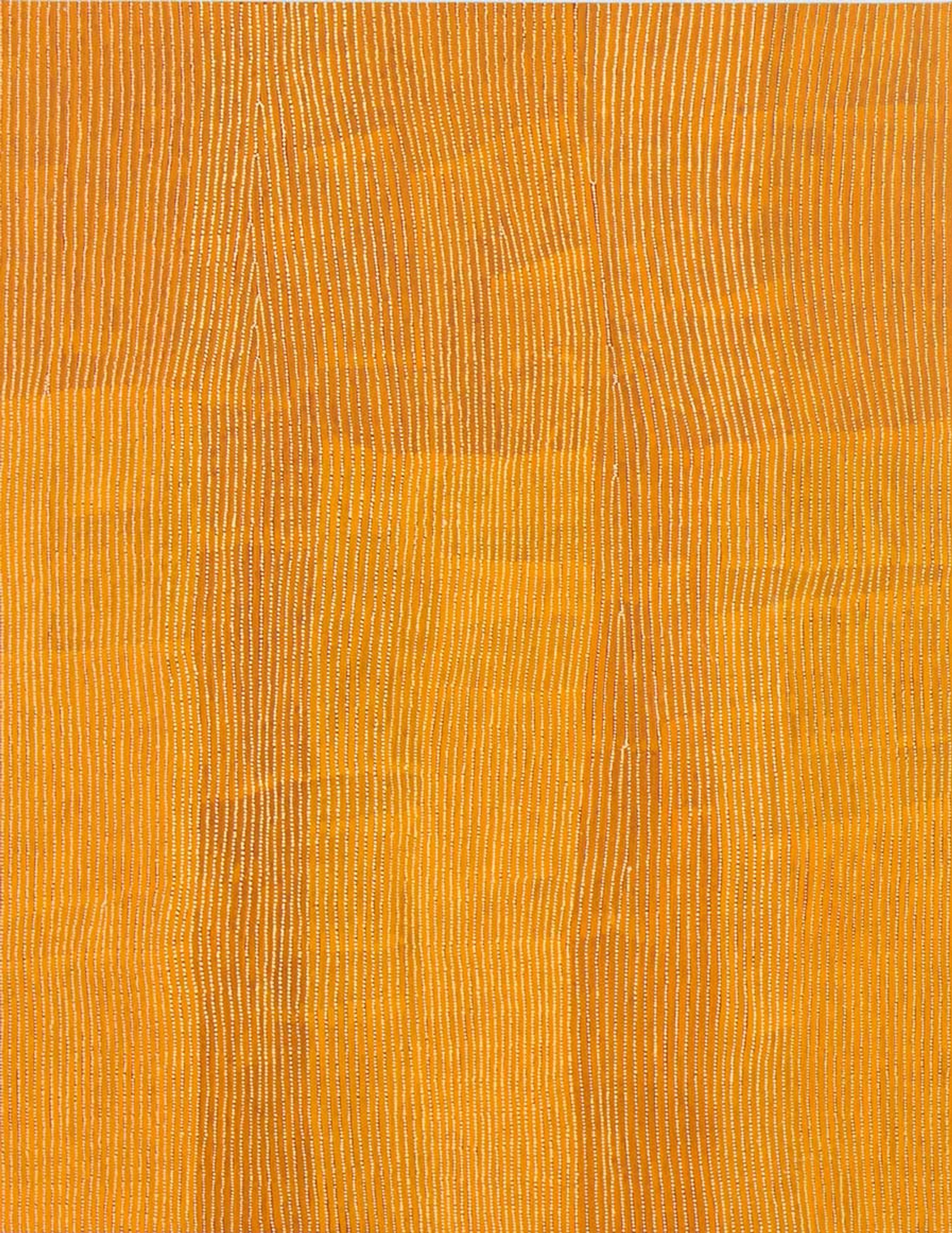
Mantua Nangala, Untitled (2024)
Around $80,000
Salon 94
Aboriginal art has a growing presence at the Tefaf fairs. In Maastricht in March, the Melbourne and New York-based D’Lan Contemporary made fair history with a stand entirely dedicated to work by First Nations artists. Collectors responded well; the gallery reported total sales of $1.4m, including an Emily Kam Kngwarray painting, which sold for $600,000. (Tate Modern opens Kngwarray’s first European museum exhibition in July.) In New York, Salon 94 exhibits a selection of paintings by Mantua Nangala, a Papunya Tula artist known for her meticulous acrylic on linen dot paintings. Nangala—a key figure in the Western Desert art movement—is an influential member of the organisation Papunya Tula Artists, which has 80 members and a gallery space in Mparntwe/Alice Springs. Born around 1959, she started painting in 1998 with a focus on visualising the oral histories of Marrapinti, a rockhole site considered to be a sacred place for women. Dots have narrative powers in Nangala’s gentle handling, often in a creamy tone over a darker earthy background, and the artist passes on stories of displacement and defiance against systematic erasure.
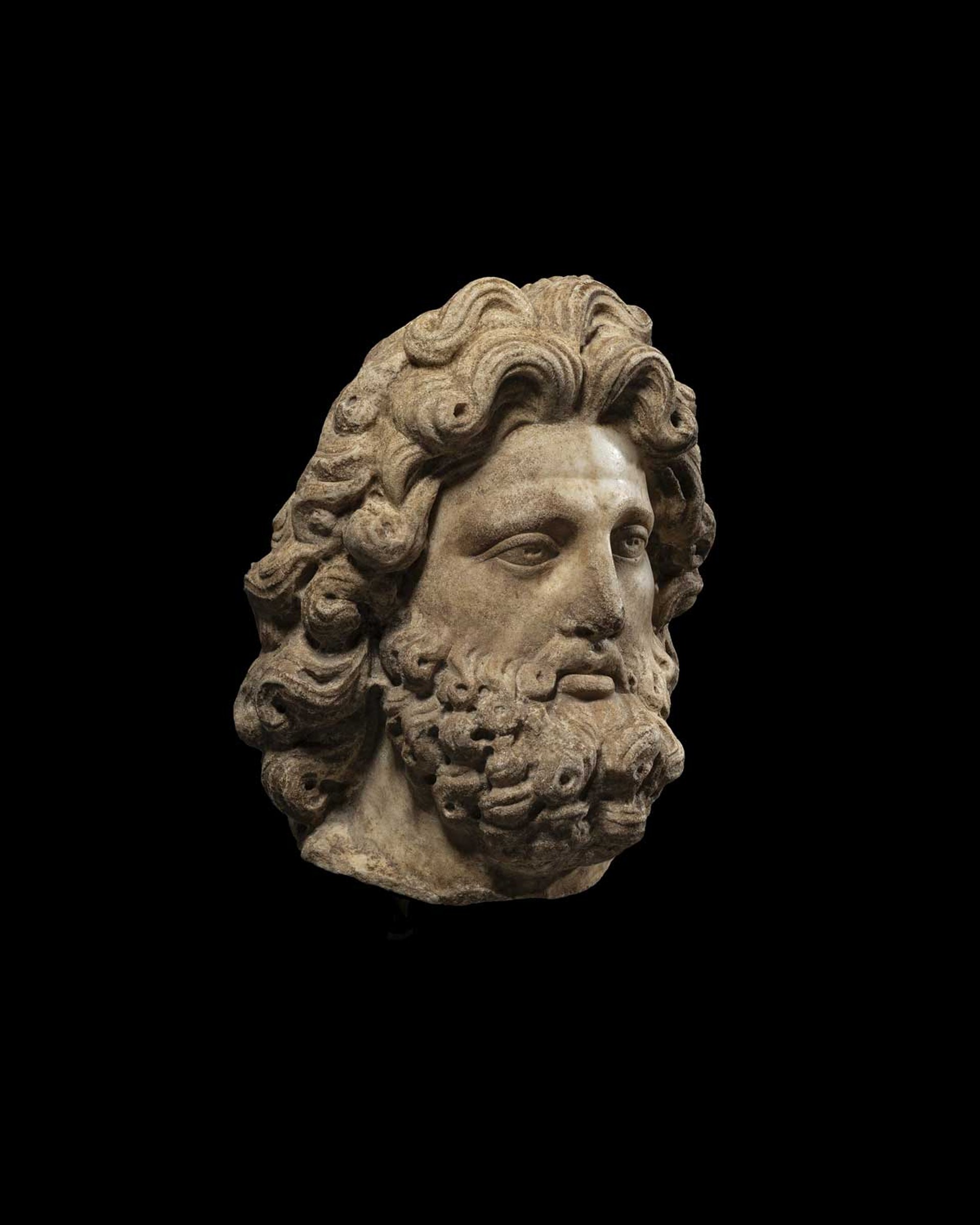
Roman head of a bearded god (around AD 2nd century)
$100,000
Charles Ede
The subject of this modestly sized marble head of a Greek god has divided researchers. Some say it is either the almighty Zeus or Poseidon, the god of the sea; others believe it is the lesser known god of medicine, Asclepius. What is not in doubt is the mastery of the carving. Some repairs have been made to the tip of the straight nose and a section of the hair, although Martin Clist, the managing director of Charles Ede, says that this is what gives antiquities—the majority of which have some degree of damage—their “uniqueness”. The bust’s oldest recorded owner is the Cologne-based dealer Axel G. Weber, who sold it to its most recent owner in the autumn of 1977 during the German Art and Antiques Fair in Munich. The Charles Ede stand also draws attention to the male physique with a marble torso of a youth from the same era, valued at $850,000.
- Tefaf New York, Park Avenue Armory, 9-13 May


