

José Parlá has had more than one brush with death. The Cuban American painter spent his formative years as a “writer”—his preferred term for a graffiti artist—on the cut-throat streets of Miami in the 1980s. But dodging bullets was nothing compared to Covid-19. In 2021 he contracted the virus and survived a four-month coma, a stroke and bleeding from the brain. His gravelly voice, damaged by the virus, is a constant reminder of the ordeal.
Parlá’s experience gives Homecoming,the title of his new Pérez Art Museum Miami (Pamm) show, another layer of meaning. He is not only returning to his hometown; he is returning to art-making after a near-death experience. He also reintroduced himself to the public with an unconventional gesture: in October, Pamm recreated Parlá’s Brooklyn studio, a stark industrial space designed by the architecture firm Snøhetta, and hosted a series of live painting sessions in which the artist finished one of the paintings now on display in the show. The influence of graffiti writing is evident in his broad, gestural painting, and the exuberance he displayed in those sessions—jumping off ladders to complete brushstrokes, blasting salsa music from a turntable—attested to his renewed devotion to his work. Ahead of his performances and the show, The Art Newspaper spoke with Parlá in his studio—the real one.
The American Mindscape (2024) responds to historic protests in Cuba as the artist recovered from Covid-19
Courtesy of the artist and Parlá Studios
The Art Newspaper: How did the idea of the studio as a part of the exhibition come about?
José Parlá: When Maritza Lacayo, the curator, was here, she saw the dynamics of my motions in painting. For me to make marks, they layer over a period of months, but they all happen with a lot of speed and force. There’s a kind of dance, or a performative aspect to the work. And we realised that the space in the museum is almost identical to the space here in the studio, with the exception that we’re not going to be able to build the mezzanine. But that idea was really concrete, because we liked that we could do something different than just hanging works on the wall. And when Maritza asked me what would I want to do, I said that I’ve always dreamt of bringing a studio into the museum, particularly because it’s a dialogue with the public.
Only people like yourself, curators, gallerists and artists come to art studios. The public can’t access art studios. It’s not that they can’t; it’s just not a normal thing to do. I thought it would be really cool for people to be able to walk in and see the practice. Everything’s happening; it’s a very normal day. I’m playing records, I want to bring a lot of my music. You can see here I have a collection of vinyl, and it ranges from a very specific collection of Cuban music from the 1920s to maybe the 1980s, and then also a lot of reggae, hip-hop, all the stuff that I grew up with in my generation. It’s a way to display not just paintings but the culture that makes a painter, makes a person. It could be anyone’s studio; it could be someone from England or Japan. But it happens to be me in this homecoming, this very Miami personality in this studio.
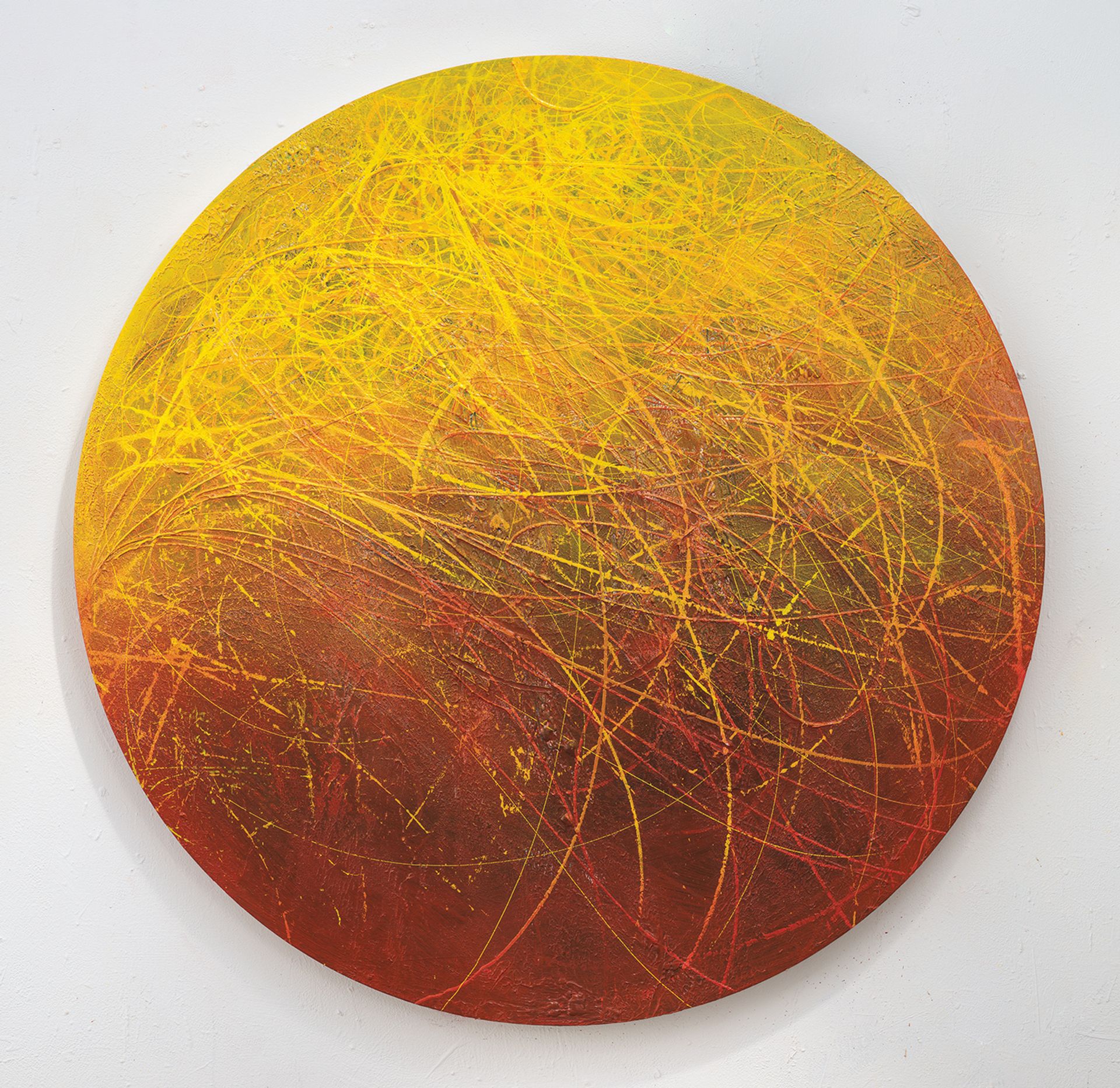
Return to Miami’s Ancestral Circle (2024) explores Parlá’s affinity with his hometown, where he grew up during the turbulent 1980s: “We chose to make art rather than make all this trouble and crime”
Courtesy of the artist and Parlá Studios
When this show was announced, it was called a “return to painting”. Was this a reference to your experience with Covid-19 and your recovery?
Yeah. That was directly about learning how to live again and using my body again. I couldn’t walk properly. My lungs were destroyed. You can hear it in my voice, still, because of the damage to the vocal cords. The lungs are scarified.
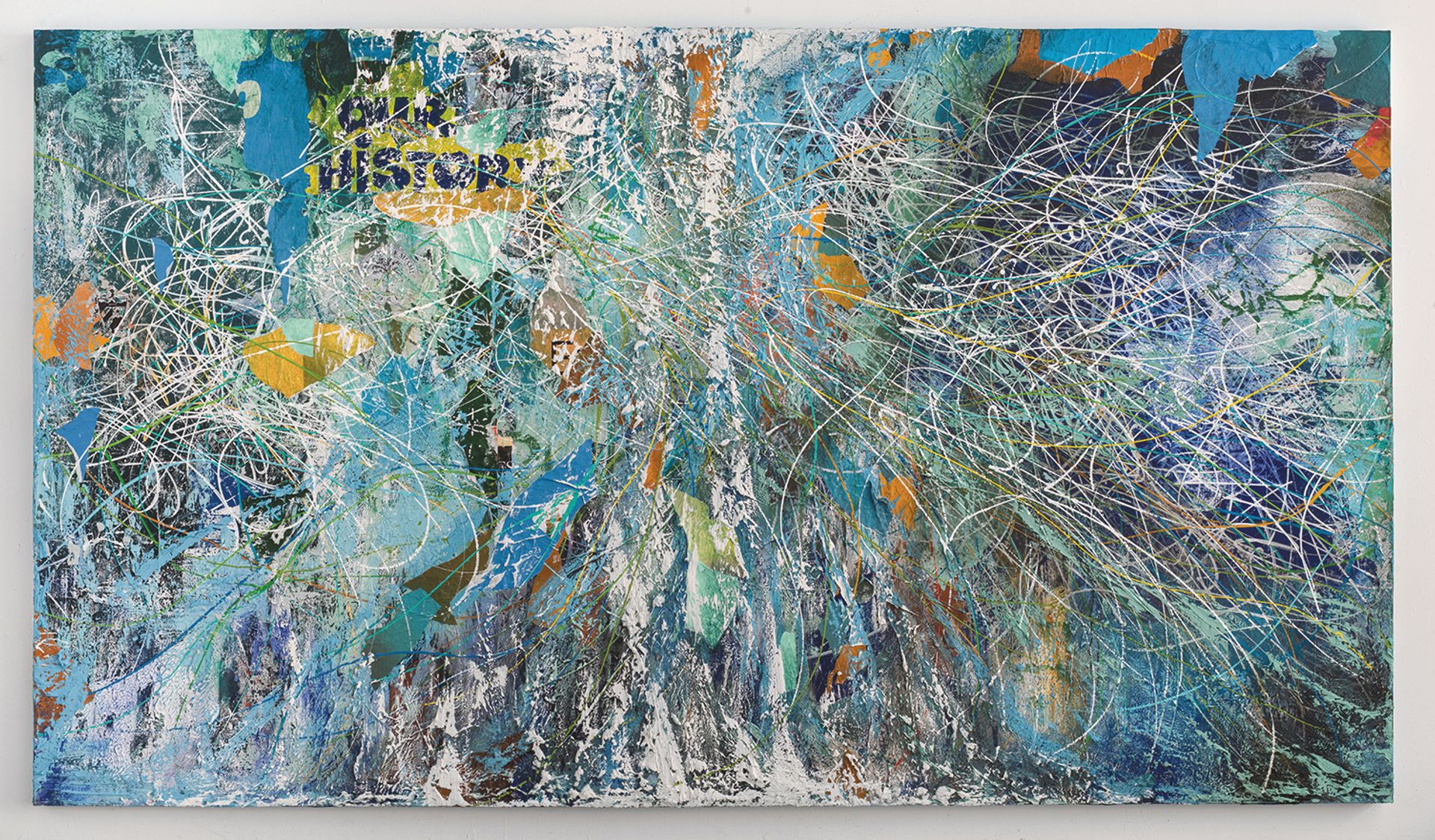
Aguanile, The Spiritual Cleansing of Home (2024) demonstrates the influence of graffiti in Parlá’s work
Courtesy of the artist and Parlá Studios
How do you feel having this show at the biggest art museum in your hometown, especially at this point in your career where you’re coming back from a deep, traumatic experience?
It’s such an honour. Miami is so dear to me. I was born there. My family is there. I have so many great friends there, and to be able to show my town my art, my talent, in the most important museum in the city, is a huge honour. You’ve got to also think about the struggle that artists have to get to these kinds of museums, and specifically coming from the underground culture.
I was a very serious artist as a writer from the ages of ten to 15. Those five years as a young kid seem like a very long time ago. By the time I got accepted to college, they tried to wash away the streets as if it didn’t belong. The painting became more about belonging, about the “we” aspect. It’s not just me I’m here to represent. I’m representing a tribe of people—young men and women—who chose to make art in really desperate conditions. Miami in the 1980s was violent; I got shot by the time I was 15. There were street gangs, there was cocaine. It was crazy in Miami. We chose to make art rather than make all this trouble and crime. To finally be in a museum in my hometown, after having done museum shows in other cities, it’s the continuance of representation of people who have been on the fringes of society but who are self-taught, who educated themselves in many ways.
• José Parlá: Homecoming, Pérez Art Museum Miami, until 6 July 2025


